
Camping Furniture Compliance Requirements
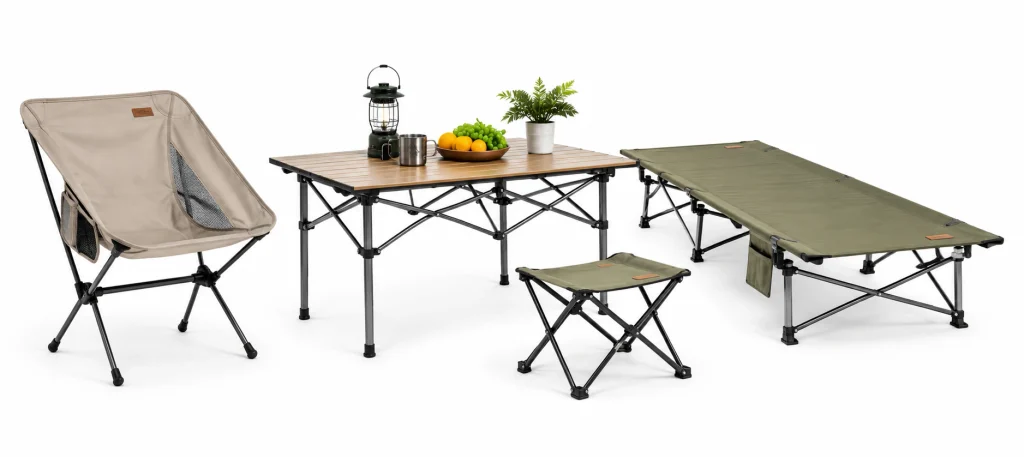
Camping furniture compliance requirements vary by product type, intended user, materials, design, and destination market. There is no single certification or test that applies to every camping chair, table, stool, or cot.
JingtuOutdoor helps overseas buyers source camping furniture and outdoor products from China. This guide explains the main camping furniture compliance requirements for the US and EU markets, including product safety standards, chemical requirements, documentation, and testing considerations.
- Why Should Buyers Confirm Compliance Before Mass Production?
- US Compliance Requirements for Camping Furniture
- EU Compliance Requirements for Camping Furniture
- Standards for Camping Chairs, Tables, Stools, and Cots
- What Test Reports and Compliance Documents Should Buyers Request?
- How to Check Whether a Test Report Matches Your Product
- Factory QC vs Compliance Testing
- Common Compliance Mistakes Buyers Make
- Conclusion
- Frequently Asked Questions
Why Should Buyers Confirm Compliance Before Mass Production?
For buyers, compliance should be confirmed before mass production because changes made later can be expensive and may invalidate existing test results.
Before approving the golden sample and production BOM, buyers should confirm:
- Applicable requirements: Identify which regulations, standards, and tests apply to the specific product, user group, materials, and target market.
- Product configuration: Make sure the tested sample matches the intended production version, including fabric, coating, plastic parts, frame dimensions, locking mechanisms, and load capacity.
- Testing scope: Confirm whether the required mechanical, chemical, labeling, and traceability checks are covered.
- Supplier documents: Review relevant test reports, material declarations, technical documents, and certificates before production starts.
- Change control: Any change to materials, construction, dimensions, coatings, or components should be reviewed to determine whether re-testing is needed.
Confirming these points early helps buyers avoid failed compliance checks, shipment delays, rework, and the cost of repeating tests after mass production has already started.
US Compliance Requirements for Camping Furniture
There is no single US federal certification for all adult camping furniture. The applicable requirements depend on the product, materials, intended age group, claims, and state of sale. Adult products may still need to meet general safety obligations, applicable lead-in-paint limits, state chemical-warning rules, and buyer-specific performance requirements.
Children’s Folding Chairs and Stools
Children’s folding chairs and folding stools within the scope of 16 CFR Part 1232 must comply with the rule, which incorporates ASTM F2613-21. Buyers should verify the product’s intended age, design, folding mechanism, and scope before applying the rule.
- Third-party testing: Testing must be completed by a CPSC-accepted laboratory for applicable children’s product requirements.
- Children’s Product Certificate: The importer or domestic manufacturer must issue a CPC based on passing test results.
- Tracking label: The product and packaging must carry the required permanent distinguishing information, where practicable.
- Lead in paint: Paint and similar surface coatings must comply with 16 CFR Part 1303.
- Total lead content: Accessible components must separately comply with applicable children’s product lead-content limits.
- Phthalates: Applicable plasticized components must be evaluated where the relevant phthalate requirements apply.
- Registration: Product registration cards and an online registration option are required for children’s folding chairs and stools covered by the applicable durable infant or toddler product requirements.

Other US Considerations
16 CFR Part 1303 addresses lead in paint and similar surface coatings; it should not be described as a general “lead content” rule. For products sold in California, buyers should also assess potential chemical exposures and warning obligations under Proposition 65 rather than relying on a generic supplier declaration.
ASTM F1838-19(2025) may be relevant only to outdoor plastic chairs that fall within its defined scope. It does not automatically apply to fabric-and-steel folding camping chairs, reclining chairs, upholstered chairs, or every type of outdoor furniture. ASTM F1561 was withdrawn and should not continue to be cited as the current standard. ASTM F1838 is generally a voluntary performance standard unless it is required by a buyer, contract, retailer, or other applicable program.
EU Compliance Requirements for Camping Furniture
The EU General Product Safety Regulation applies to consumer products placed or made available on the EU market. Where product-specific EU legislation covers particular safety aspects, the GPSR applies to the aspects and obligations not covered by those specific provisions. It does not create a generic “GPSR certificate.” Buyers and importers need a documented compliance process.
- Internal risk analysis: Identify foreseeable mechanical, chemical, labeling, and misuse risks.
- Technical documentation: Maintain product descriptions, specifications, drawings, risk analysis, test evidence, and corrective-action records.
- Product identification: Use a type, batch, serial number, or other identifier that supports traceability.
- Economic-operator information: Show the manufacturer and importer details where applicable.
- EU-based responsible economic operator: A covered product must have the required responsible operator established in the EU.
- Warnings and instructions: Provide understandable safety information in the language required by the destination country.
- Online listings: Distance-sale offers must display the required product identification, economic-operator, and warning information.
- Document retention: Responsibilities and retention periods should be assigned between the manufacturer, importer, and other relevant operators.
Under REACH, buyers should distinguish Annex XVII restricted substances from SVHC information obligations. A supplier’s general “REACH certificate” is not enough. Confirm which fabrics, coatings, plastics, foams, inks, adhesives, and metal finishes are covered by supplier declarations, material records, or test evidence, and whether that evidence matches the final production BOM.
CE marking is not automatically required for ordinary camping furniture. It should only be applied when specific harmonization legislation that requires CE marking covers the product.
Standards for Camping Chairs, Tables, Stools, and Cots
EN 581 is not a product certification. It is a European technical standard commonly used to assess the mechanical safety of applicable outdoor seating and tables and may be used as evidence when demonstrating product safety. The referenced edition and national adoption should be verified for the destination country before final testing.
- Camping chairs: EN 581-1:2017 contains general safety requirements, while EN 581-2:2026 covers mechanical safety requirements and test methods for adult outdoor seating, including applicable camping use.
- Camping tables: EN 581-1:2017 and EN 581-3:2026 may apply to adult outdoor tables, including applicable camping use.
- Camping stools: Adult stools should be assessed according to their design and the scope of the relevant seating standard. US children’s folding stools may fall under 16 CFR Part 1232 and ASTM F2613-21.
- Camping cots: Cots should not automatically be tested to EN 581 because that series focuses on outdoor seating and tables. Requirements must be selected according to the cot’s design, user group, materials, claims, and destination market.
A test report for one product category should not be reused for another simply because both products are marketed as camping furniture.
What Test Reports and Compliance Documents Should Buyers Request?
Do not ask only whether the supplier “has certification.” Request a document package that allows the tested construction to be compared with the product being ordered.
- Final product specification, approved drawing, age grading, dimensions, and claimed load
- Approved BOM and material declarations for fabric, coating, plastic, foam, ink, adhesive, and hardware
- Complete laboratory reports, including sample photographs, model numbers, methods, results, and laboratory details
- REACH Annex XVII evidence and SVHC information supported by clearly identified materials and components
- GPSR risk analysis, technical documentation, warnings, traceability plan, and economic-operator information
- CPC or GCC and their supporting reports where applicable
- Label artwork, tracking information, packaging marks, instructions, and online-listing information
- A written change-control procedure covering materials, structure, suppliers, and production revisions
Supplier documents do not transfer the importer’s compliance responsibility. The importer or other responsible economic operator must still determine the applicable requirements and ensure that the evidence is adequate.
How to Check Whether a Test Report Matches Your Product
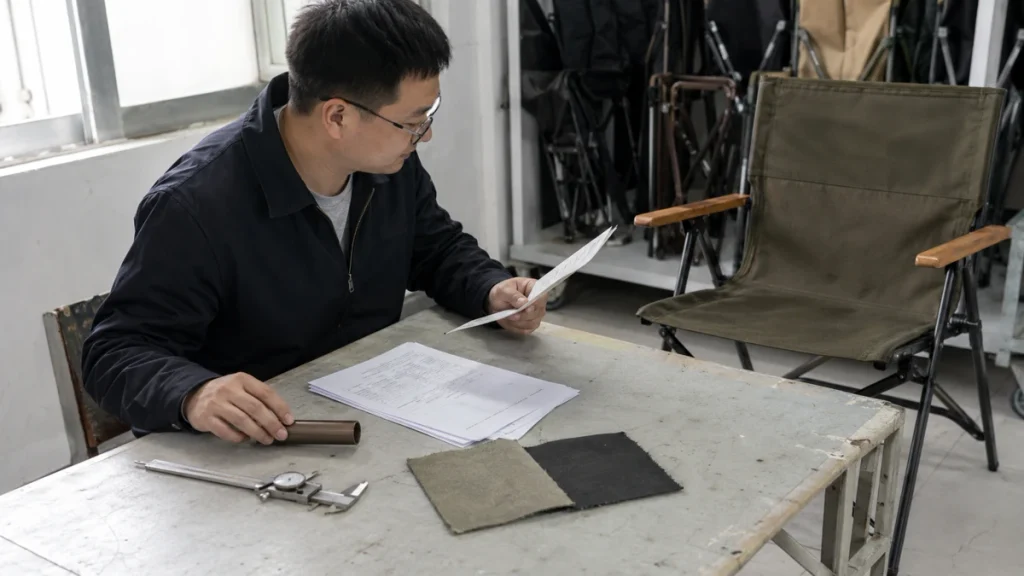
Start with the sample identification page rather than the pass conclusion. Compare the report photographs, model number, dimensions, materials, structure, test method, report date, and applicant with the approved product and current BOM. Any unexplained difference should be reviewed before relying on the report.
When May an Existing Test Report No Longer Represent the Product?
A change does not always require a completely new test program, but it must be assessed by a competent compliance professional or laboratory. Existing evidence may no longer represent the product when any of the following changes occur:
- The fabric composition, coating, dye, or finishing treatment changes
- The paint, plating, powder coating, ink, adhesive, or other surface material changes
- The plastic resin, colorant, recycled content, or plasticizer changes
- The frame tube diameter, wall thickness, or alloy changes, or the welding method changes
- The hinge, locking mechanism, joint, fastener, or anti-pinch design changes
- The dimensions, geometry, intended age, or claimed load capacity changes
- A children’s model relies on a report issued for an adult version, or vice versa
- The tested component supplier differs from the mass-production BOM
Buyers should require the supplier to disclose changes before production and obtain written confirmation on whether partial verification or retesting is needed.
Factory QC vs Compliance Testing
Factory quality control and compliance testing have different purposes. Factory QC checks whether production follows the approved specification. It may cover dimensions, appearance, stitching, folding and locking operation, labeling, packaging, and agreed routine load checks.
Compliance testing uses defined regulatory or standard methods to evaluate issues such as structural safety, stability, durability, restricted substances, and children’s product requirements. A factory inspection can reveal production defects, but it cannot replace required third-party or laboratory testing.
Common Compliance Mistakes Buyers Make
- Asking for a generic camping furniture certificate instead of defining the product and market
- Describing EN 581 as a mandatory certification rather than a technical standard
- Applying CE marking to ordinary camping furniture without identifying applicable CE legislation
- Treating a supplier declaration or “REACH certificate” as proof for every material and substance
- Using ASTM F1838 for camping chairs outside the standard’s defined product scope
- Continuing to cite withdrawn ASTM F1561
- Confusing lead in paint under 16 CFR Part 1303 with children’s product total lead-content limits
- Using a report whose photographs, model, materials, construction, or age grading do not match production
- Approving material or structural changes without reviewing their effect on existing evidence
Conclusion
Camping furniture compliance is not about collecting as many certificates as possible. Buyers need to identify the requirements that apply to the product, market, intended user, materials, and design, then confirm that the supporting evidence represents the final production version.
JingtuOutdoor helps overseas buyers source camping furniture and other outdoor products from China. If you need assistance identifying the applicable compliance requirements, please contact us to discuss your project.
Frequently Asked Questions
Does all camping furniture sold in Europe need CE marking?
No. CE marking is required only when legislation applicable to the product specifically requires it.
Is EN 581 mandatory in Europe?
EN 581 is not a product certification. It is a technical standard commonly used to assess applicable outdoor seating and tables and may support a product-safety assessment.
Which ASTM standard applies to camping chairs in the US?
It depends on the product. ASTM F1838-19(2025) may be relevant to outdoor plastic chairs within its scope, but it does not cover all camping chairs.
Do children’s camping chairs require third-party testing?
Applicable children’s products generally require testing by a CPSC-accepted third-party laboratory for the relevant children’s product safety rules, followed by a CPC issued by the importer or domestic manufacturer.
Can one REACH report cover every material in a camping chair?
Not automatically. Buyers must confirm the tested materials, substances, limits, and component coverage against the final BOM.
Can factory inspection replace compliance testing?
No. Factory QC controls production quality, while compliance testing follows specified regulatory or standard methods.