
How to Source Camping Cots from China
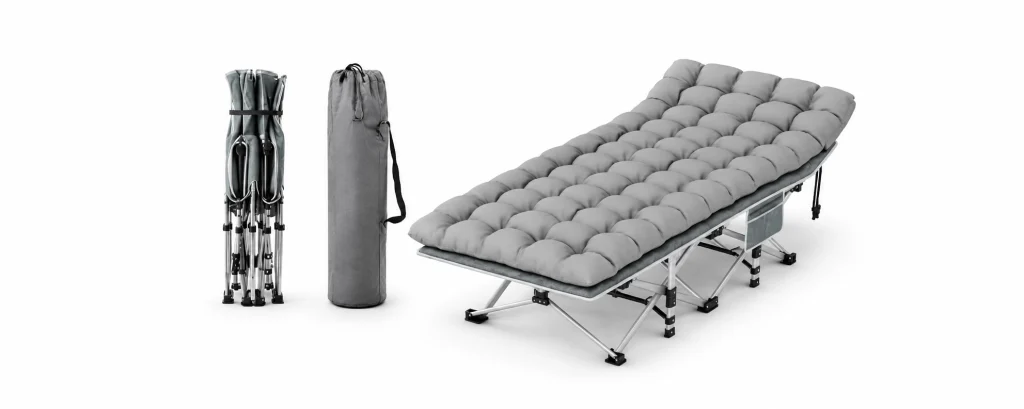
If you are looking for a practical product to add to your range of camping products, camping cots can be a good choice. They are widely used for camping, travel, fishing, emergency accommodation, and other outdoor activities.
China has a well-developed supply chain for camping cots, offering a wide range of product types, materials, structures, and customization options.
This guide will explain how to source camping cots from China and provide practical advice on selecting suppliers, comparing product specifications, checking quality, and managing sourcing risks. Whether you are an experienced buyer or sourcing camping cots for the first time, it will help you better understand the key points to consider throughout the sourcing process.
- What Is a Camping Cot?
- What Types of Camping Cots Can You Source from China?
- How to Find and Evaluate Camping Cot Manufacturers in China
- How Should You Compare Camping Cot Quotations?
- What Safety and Compliance Requirements May Apply?
- What Can Be Customized on a Camping Cot?
- What Are the Common Risks When Sourcing Camping Cots?
- How Should Camping Cots Be Packaged and Shipped?
- Conclusion
- Frequently Asked Questions
What Is a Camping Cot?
• A camping cot, also called a camp cot or camp stretcher in some markets, is a type of camping furniture designed as a portable raised bed for sleeping or resting during camping, travel, and other outdoor activities.
• Most camping cots are made with a folding metal frame and a fabric sleeping surface, making them easy to set up, carry, and store.
• This type of product raises the user above damp or uneven ground. However, insulation may still be needed because airflow beneath the cot can increase heat loss in cold conditions.

What Types of Camping Cots Can You Source from China?
We will cover the most common camping cot types that buyers can source from Chinese suppliers. Choosing the right type first makes it easier to compare specifications and quotations later.
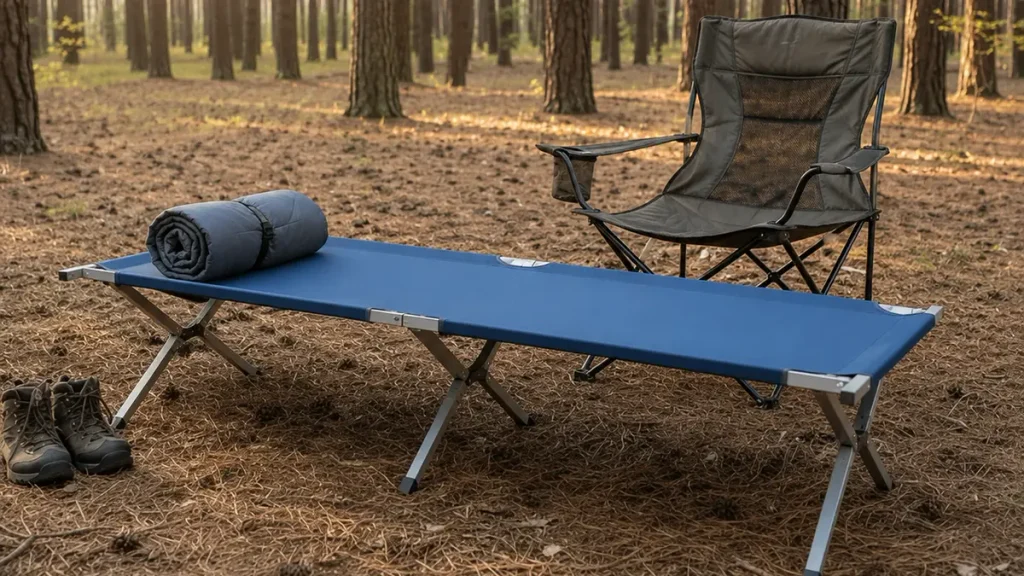
Traditional Folding Camping Cots
Traditional folding camping cots usually use a steel or aluminum frame with side rails, cross legs, end bars, and a tensioned fabric sleeping surface.
Why buyers choose them:
• Simple and familiar folding structure
• Available with steel or aluminum frames
• Suitable for different frame and fabric specifications
Best use cases:
• Car camping
• Family camping
• Institutional or group use
Buyers should also check whether the end bars are difficult to install, whether the fabric tension is consistent, and whether the folded length affects packaging.
Lightweight and Ultralight Camping Cots
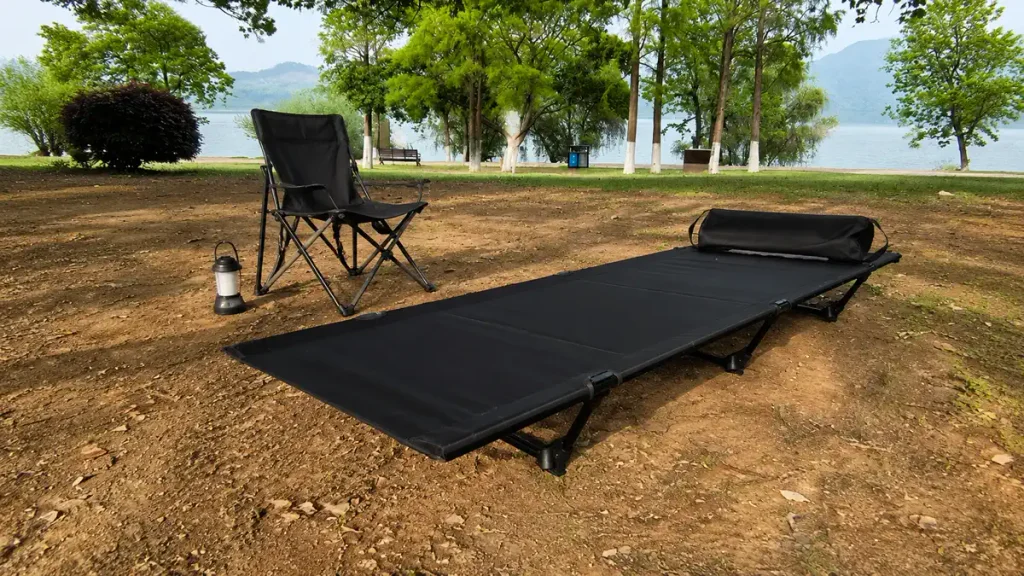
Lightweight camping cots usually use segmented aluminum poles, a low-profile structure, and elastic cords or detachable connecting parts.
Why buyers choose them:
• Designed for lower product weight
• Can be disassembled into smaller sections
• More suitable for compact packing and lightweight travel
Best use cases:
• Hiking
• Lightweight camping
• Outdoor trips where carrying weight matters
During sourcing, buyers should pay attention to assembly force, plastic or composite connectors, pole strength, and concentrated loading points.
Heavy-Duty and Oversized Camping Cots
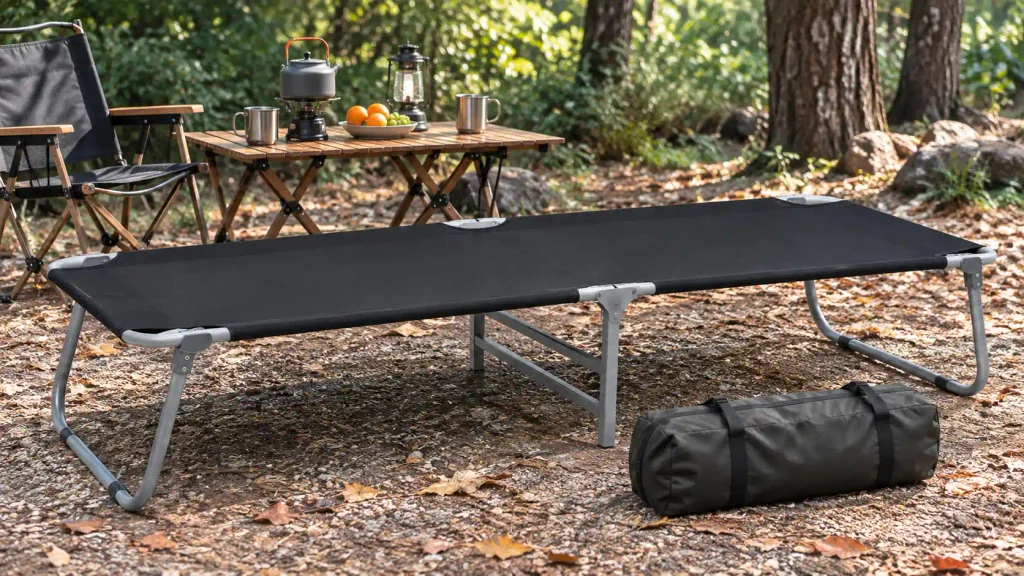
Heavy-duty and oversized camping cots normally use a wider sleeping surface, larger frame sections, or additional supporting legs.
Why buyers choose them:
• Wider sleeping area
• More frame support points
• Suitable for larger-size product lines
Best use cases:
• Oversized camping cot collections
• Rental use
• Institutional purchasing
There is no single load-capacity figure that applies to all heavy-duty cots. Buyers should always confirm the actual load-test conditions.
Instant-Fold and Padded Camping Cots
Instant-fold camping cots use an integrated folding structure and may include a mattress, pillow, backrest, or side pocket.
Why buyers choose them:
• Integrated folding structure
• Can include additional comfort features
• Offers more product configuration options
Best use cases:
• Comfortable car camping
• Family camping
• Outdoor leisure use
The extra hinges, padding, and larger packing volume can make sourcing and shipping more complicated.

Specialty Camping Cots
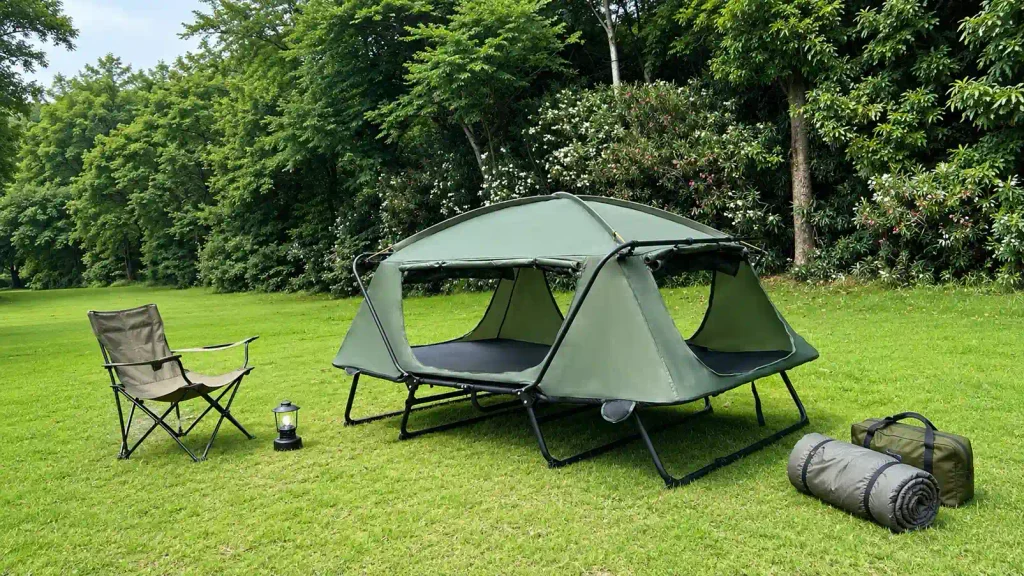
Some buyers may also source more specialized camping cots for specific applications. These include tent cots, bunkable or modular cots, and emergency or institutional cots.
Common types:
• Tent Cots
• Bunkable or Modular Cots
• Emergency and Institutional Cots
Key sourcing points:
• Stability
• Connection structure
• Instructions
• Specific purchasing requirements
These products usually require more attention to structure, stability, instructions, and the requirements of the intended application.
Note: Adult camping cots and infant travel cots are different product categories. Infant travel-cot regulations should not be used to evaluate ordinary adult camping cots.
Buyers developing a broader camping furniture range may also compare the structures and customization options used for custom camping chairs.
How to Find and Evaluate Camping Cot Manufacturers in China
When evaluating camping cot manufacturers in China, buyers should first identify the actual supplier type and verify its OEM/ODM capability. A supplier may be a complete-product manufacturer, component factory, assembly factory, or trading company. The key is whether it can clearly explain where the product is made and how production is controlled.
Identify the Actual Supplier Type
When comparing camping cot suppliers in China, check whether the supplier understands the BOM, controls outsourced processes, and can keep mass production consistent with the approved sample.
Check Which Processes Are Done In-House
Ask which processes are completed in-house, such as cutting, bending, punching, welding, powder coating, plastic injection, fabric cutting, sewing, assembly, testing, and packaging.
Also check whether the supplier keeps inspection records and corrective-action records. These records can help show whether quality issues are identified, followed up, and properly closed during production.
Do not assume that a supplier has stable production capability simply because it shows a few machines.
Review Quality-Control Capability
A reliable camping cot manufacturer should be able to show how incoming materials, first articles, in-process quality, approved samples, non-conforming products, batch traceability, and production changes are controlled.
Verify Certificates and Test Reports
When reviewing certificates or test reports, check the company name and address, product model, product photos, test standard and version, test date, material and structure, laboratory qualification, and report authenticity.
For a new supplier, it is usually better to start with a small trial order. Once the product quality and production performance meet your company’s requirements, you can then move to larger-volume orders.

How Should You Compare Camping Cot Quotations?
To compare quotations accurately, buyers should ask each supplier to quote against the same product specifications, testing requirements, packaging, and commercial terms.
| Comparison Item | What to Check |
|---|---|
| Dimensions & Weight | Open size, folded size, net weight, carton size, gross weight |
| Frame | Material, tube diameter, wall thickness, surface treatment |
| Fabric | Composition, Denier, GSM, coating |
| Components | Rivets, locking parts, carry bag, accessories |
| Testing | Load-test basis and required testing costs |
| Packaging | Retail packaging, carton quantity, carton size |
| Commercial Terms | Tooling cost, price terms, payment terms, quotation validity |
Buyer note: The lowest quotation may be based on thinner tubes, different fabric, simplified components, less testing, or different packaging—not necessarily better production efficiency.
What Safety and Compliance Requirements May Apply?
• General product safety: Camping cots should be safe for their intended use and include necessary product identification, instructions, and warnings. For the EU market, adult camping cots are generally subject to the General Product Safety Regulation (EU) 2023/988. Buyers should confirm product traceability, risk assessment, technical documentation, responsible economic-operator information, and appropriate instructions and warnings. Requirements may differ according to the product design and target market.
• Chemical and textile requirements: Buyers should check requirements such as REACH or UK REACH, restricted substances, textile fiber labeling, and any rules that may apply to coatings, plastic parts, or printing inks.
• CE and factory certificates: Ordinary non-electrical adult camping cots do not automatically require CE marking simply because they are sold in Europe. REACH is not a certification, and ISO 9001, BSCI, or SMETA do not replace product compliance requirements.
• Adult cots vs. infant travel cots: Adult camping cots and infant travel cots are different product categories and should not be evaluated under the same standards.
What Can Be Customized on a Camping Cot?
For buyers sourcing custom camping cots or OEM camping cots, customization can cover branding, materials, specifications, and product structure.
| Customization Area | Options |
|---|---|
| Branding & Private Label | Fabric color, logo printing, embroidery, woven labels, carry bags, carton marks, retail packaging |
| Frame & Materials | Frame material, tube specification, surface finish |
| Fabric | Fabric composition, Denier, GSM, coating |
| Product Size | Open dimensions, cot height, other size changes |
| Structure | Leg design, locking system, adjustable backrest, bunkable structure |
| Accessories | Side pocket, side table, mattress |
Buyer note: When developing private label camping cots, changes to the structure, tube specification, fabric, or claimed load capacity may require new sampling and testing.

What Are the Common Risks When Sourcing Camping Cots?
| Risk | What Can Go Wrong | How to Prevent It |
|---|---|---|
| Different quotation specifications | Suppliers may quote based on different materials, dimensions, or configurations | Use the same specification sheet for all suppliers |
| Unverified load-capacity claims | The stated load capacity may not include clear test conditions | Confirm the loading method, position, duration, and test basis |
| Tube wall thickness changes | Mass production may use thinner tubing than the approved sample | Record the tube specification and verify it during production |
| Fabric specification changes | Mass-production fabric may differ from the approved sample | Confirm composition, Denier, GSM, coating, and the approved fabric sample |
| Component substitution | Rivets, locking parts, or other components may be replaced | Approve key components and require approval for any changes |
Other common risks include difficult folding or assembly, frame instability or deformation, fabric tearing at stress points, test reports that do not match the actual model, and weak packaging.
Clearly documenting the approved specifications, sample, materials, and key components before mass production can help reduce these risks.
How Should Camping Cots Be Packaged and Shipped?
Camping cots are relatively sensitive to packaging because the folded frame, metal parts, and fabric can be damaged if they are not properly protected during transport.
• Protect metal parts and hinges: Metal ends and moving joints should be separated or padded to reduce coating scratches and prevent the frame from rubbing against the fabric.
• Match the carry bag to the folded size: The carry bag should be designed around the actual folded dimensions so the cot can be packed and removed easily.
• Strengthen the outer packaging: For long-distance or e-commerce delivery, pay attention to carton strength, long-edge impact, and the risk of metal ends puncturing the carton.
• Confirm carton details: Before shipment, check carton quantity, carton dimensions, gross weight, and loading efficiency.
• Verify packaging performance: Packaging drop and compression tests can be used when required to check whether the packing method is suitable for transport.
For consolidated shipments, product size, weight, and supplier locations should also be considered when planning container loading and delivery.
Conclusion
China has a well-developed camping cot supply chain, with suppliers covering metal frame processing, fabric cutting and sewing, surface treatment, assembly, and packaging. This gives buyers access to a wide range of product types, materials, and customization options.
For buyers sourcing camping cots from China, choosing the right product is only the first step. It is equally important to confirm product specifications, supplier capability, quality requirements, and compliance before mass production.
JingtuOutdoor can help buyers source camping cots from China by screening suppliers, comparing quotations, and coordinating samples, making the sourcing process clearer and reducing sourcing risks.
If you are planning a camping cot project, contact JingtuOutdoor for sourcing support in China.
Frequently Asked Questions
What types of camping cots can be sourced from China?
Chinese suppliers offer traditional folding cots, lightweight and ultralight cots, heavy-duty and oversized models, padded or instant-fold cots, and specialty designs such as tent or modular cots.
What is the MOQ for camping cots from China?
MOQ depends on the product type, materials, color, branding, packaging, and level of customization. Standard models may have lower minimums, while custom fabrics, colors, structures, or packaging may require higher quantities.
How can buyers compare camping cot manufacturers?
Compare suppliers using the same product specifications. Also check their actual production processes, quality-control records, sample consistency, certificates, and test reports rather than comparing price alone.
What can be customized on a camping cot?
Common options include fabric color, logos, labels, carry bags, packaging, frame materials, tube specifications, fabrics, dimensions, backrests, side pockets, mattresses, and other structural features.
Do camping cots require CE marking?
Ordinary non-electrical adult camping cots do not automatically require CE marking simply because they are sold in Europe. Compliance requirements should be confirmed according to the actual product and target market.
What is the typical lead time for camping cots?
Lead time varies depending on the product, order quantity, customization, material availability, packaging, and production schedule. Buyers should confirm the actual lead time after the specifications and sample have been approved.