
Camping Stove Manufacturers in China
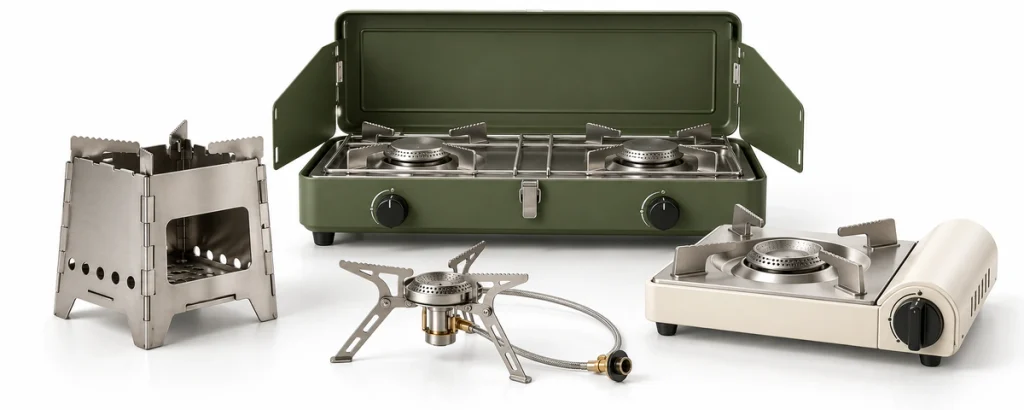
Camping stoves are portable cooking appliances used for camping, hiking, backpacking, and other outdoor activities. As part of the broader camping equipment range, they include propane, butane, backpacking, and wood-burning cooking stoves.
China’s outdoor equipment supply chain combines metal fabrication, burner components, fuel systems, and assembly capabilities. These resources support different stove designs, product configurations, and customization requirements, depending on the manufacturer.
This guide explains how to compare camping stove types, evaluate product quality and safety, explore customization options, and select suitable camping stove manufacturers in China.
- Types of Camping Stoves Available from Chinese Manufacturers
- Key Specifications to Consider When Sourcing Camping Stoves
- Camping Stove Customization and Accessories
- How to Choose a Camping Stove Manufacturer in China
- Camping Stove Safety Standards and Certifications by Market
- Camping Stove Quality Inspection Before Shipment
- Shipping Camping Stoves and Gas Canisters from China
- Conclusion: Sourcing Camping Stoves from China
- FAQ
- References
Types of Camping Stoves Available from Chinese Manufacturers
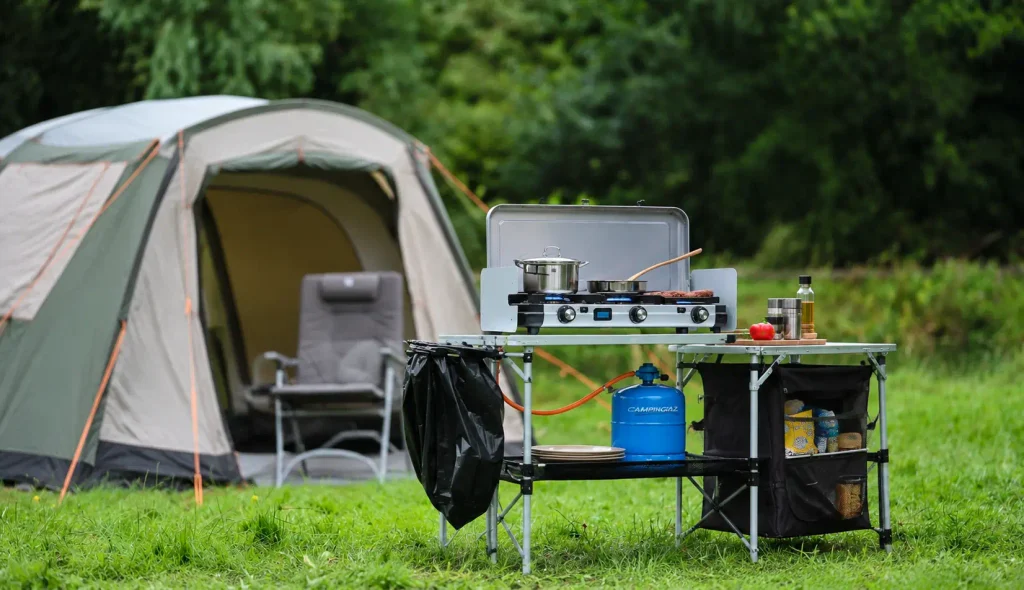
For a camp kitchen table setup, camping stoves come in different designs for outdoor cooking, ranging from compact gas burners to larger multi-burner units. They vary in fuel systems, construction, portability, and cooking applications to suit different outdoor activities.
Portable Gas Stoves
Portable gas stoves are compact cooking appliances used for camping, picnics, and outdoor meals. These gas camping stoves include butane and propane models with different fuel connections, burner designs, and ignition systems. Some feature integrated canister compartments, while others connect to external fuel containers. Buyers sourcing wholesale butane stoves should ask each butane stove manufacturer to identify the approved cartridge connection and any destination-specific requirements.
Backpacking Stoves
Backpacking stoves are designed for hiking, trekking, and lightweight camping. A backpacking stove may feature a canister-mounted burner, a remote fuel connection, or an integrated cooking system. Compact construction, folding pot supports, and lightweight components make these stoves suitable for outdoor activities where storage space and weight matter. Ask the backpacking stove manufacturer whether the stated weight includes the storage case and which camping cookware sizes the pot supports can accommodate.
2-Burner Camping Stoves
A 2 burner camping stove provides two cooking positions for preparing meals outdoors, making it suitable for family camping and group activities. These double burner camping stove designs may feature independently adjustable burners, folding lids, wind guards, and removable cooking grates. Different configurations accommodate various cookware sizes and cooking requirements. If the range includes camping kettles, check their base dimensions against the stove supports.
Wood-Burning Camp Stoves
Wood burning camp stoves use small pieces of wood or twigs as fuel for outdoor cooking. These compact stoves may feature stainless steel panels, removable pot supports, or folding structures. Some folding camp stove designs can be collapsed or disassembled into flat panels for easier storage and transportation.
When comparing portable camping stove manufacturers, first define the target market, customer group, and intended use, then match these needs with the stove’s fuel system, burner configuration, materials, and portability. For bulk sourcing projects, buyers should also confirm technical specifications, safety requirements, customization options, and whether the manufacturer has relevant production experience with the selected stove type.
Key Specifications to Consider When Sourcing Camping Stoves
When sourcing camping stoves from China, buyers should compare technical specifications across suppliers to ensure product compatibility, reliable performance, and suitability for their target markets. Ask portable gas stove manufacturers to provide a model-specific specification sheet identifying the fuel system, rated heat input, fuel consumption, weight, and packed dimensions.
- Fuel Type and Compatibility: Confirm whether the camping stove fuel is butane, propane, an isobutane-propane blend, or wood, and verify the approved fuel canister, connector, and regulator requirements.
- Burner Configuration and Heat Input: Check the number of burners, flame adjustment range, and rated heat input in BTU/h or kW, including individual burner ratings for multi-burner models.
- Materials and Construction: Verify the material grade, thickness, and surface treatment of stainless steel, aluminum, or coated steel components to assess durability and structural stability.
- Weight and Packed Dimensions: Compare stove weight, folded dimensions, and required accessories, particularly for lightweight camping stove and ultralight backpacking stove applications.
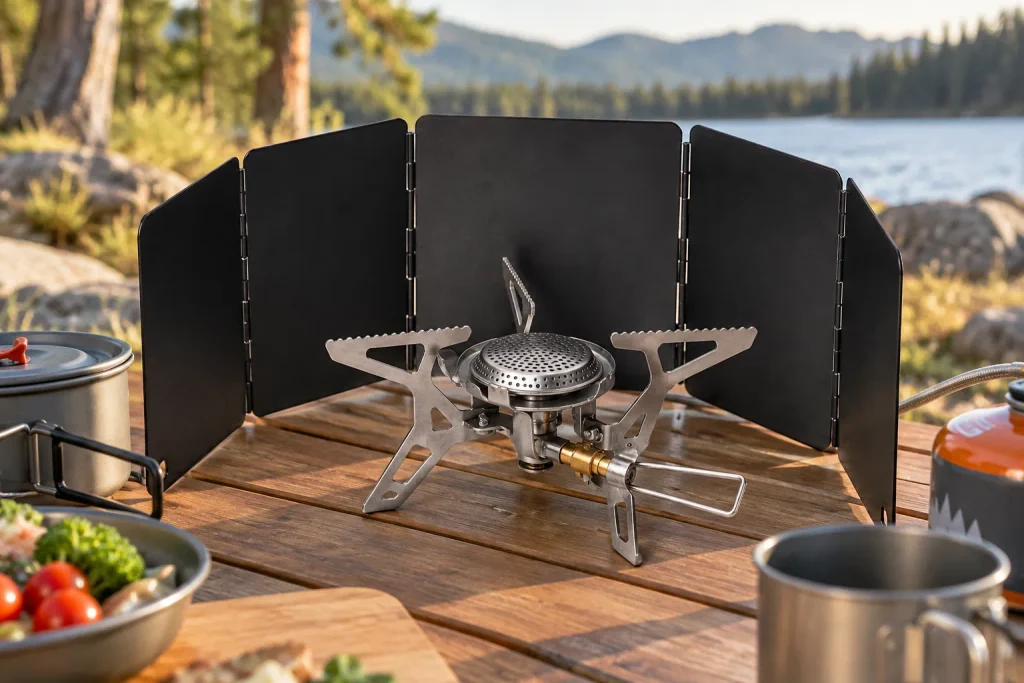
- Wind Protection: Evaluate built-in wind guards and camping stove windscreen designs, ensuring any external windscreen is compatible with the specific stove and fuel system.
- Ignition and Safety Features: Check manual or piezo ignition, gas valves, seals, connection integrity, and applicable safety documentation for the destination market.
- Cooking Performance and Fuel Efficiency: Compare boil time, fuel consumption, burn time, and simmer control under consistent test conditions rather than relying on BTU ratings alone.
Example model: Fire-Maple FMS-300T
The Fire-Maple FMS-300T is used here as an example of how buyers can compare published stove specifications, not as a supplier recommendation.
| Specification | Manufacturer-published value |
|---|---|
| Model | FMS-300T |
| Fuel and connection | EN417 threaded isobutane-propane canisters |
| Published power output | 2.6 kW |
| Fuel consumption | 185 g/h |
| Stove weight | 45 g |
| Packed size | 40 × 51 mm |
Source: Fire-Maple official FMS-300T product specifications (checked October 17, 2026). These figures describe this model only; confirm the current specification sheet and approved fuel connection for the exact product being ordered.
Camping Stove Customization and Accessories
For overseas buyers, customizing camping stoves involves more than simply adding a logo. When developing products for their target markets, buyers should also consider accessory compatibility and the availability of replacement parts.
- Logo & Branding: Explore logo printing, laser marking, and branded product labels based on the stove’s materials, surface finish, and supplier capabilities.
- Color & Surface Finish: Discuss available color options and surface treatments for stove housings, panels, and other suitable components.
- Custom Packaging: Consider branded retail boxes, instruction manuals, warning labels, and carton specifications based on the destination market.
- Camping Stove Accessories: Evaluate compatible carrying cases, pot supports, wind guards, and other accessories according to the stove model and intended use.
- Camping Stove Replacement Parts: Check the availability of compatible igniters, control knobs, valves, and other serviceable components to support after-sales maintenance.
Sourcing Considerations: Customization options and minimum order quantities vary depending on product design. For example, logos can be stamped directly into steel camping stove windscreens. At sufficient production volumes, stamping can offer a lower unit cost than laser marking, depending on the material, order quantity, and supplier capabilities.
How to Choose a Camping Stove Manufacturer in China
Choosing the right camping stove manufacturer involves more than comparing prices. Overseas buyers should evaluate a supplier’s production capabilities, quality control, product compliance, and ability to meet their purchasing requirements.
- Manufacturing Capabilities: When evaluating camping gas stove manufacturers, check production scale, workforce, manufacturing facilities, and whether key stove components are produced in-house or outsourced.
- Product Testing and Safety: Review available test results for gas leakage, ignition performance, flame stability, and other safety requirements relevant to the specific stove model.
- Quality Control: Check whether the factory has a dedicated quality control team and performs final inspections on its production line. On-site inspection procedures and quality records can help buyers assess the factory’s quality management capabilities.
- Certifications and Market Compliance: For products intended for the EU market, ask the supplier to provide CE-related conformity documentation applicable to the specific stove model. Verify that the documents match the actual product and relevant regulatory requirements.
- MOQ and Lead Times: Confirm the minimum order quantity and request a clear delivery commitment, specifying how many days after order confirmation the products will be ready for shipment. Avoid vague or unconfirmed production schedules.
- Samples and Supplier Communication: Ask camping gas stove suppliers for product samples and actual photos taken at the factory, including relevant product details and usage scenarios. Check whether the product’s design, functionality, and practical use meet the needs of the target market and intended users.
Sourcing Considerations: In one of our camping stove sourcing projects, we began by researching suppliers online, reviewing their company information, production scale, and workforce size. We also checked publicly available social insurance enrollment records through Tianyancha as an additional reference for assessing factory scale.
Next, we requested quotations from several suppliers for comparable products. One supplier offered a noticeably lower price, so we visited the factory to understand the reasons behind its pricing.
During the visit, we found that the factory operated its own metal stamping workshop and produced stove support components in-house. Its larger-volume production helped reduce manufacturing costs. We also observed final inspection procedures on the production line, which formed part of our assessment of its quality control capabilities.
After considering its manufacturing setup, cost structure, and quality control practices, we selected this supplier as a suitable partner for the project.
Camping Stove Safety Standards and Certifications by Market
Camping stove safety requirements vary by destination market, fuel type, and product design. Overseas buyers should confirm the applicable standards before importing camping stoves from China.
Gas camping stoves are for outdoor use only. Follow the manufacturer’s windscreen instructions; do not tightly surround both a canister-mounted stove and its fuel canister with a windscreen, as trapped heat can overheat the canister.
- European Union: Regulation (EU) 2016/426 (Gas Appliances Regulation, GAR) and EN 521 for applicable portable LPG camping stoves. Confirm the relevant standard and edition for the specific stove design.
- United States: ANSI Z21.72 / CSA 11.2 for portable-type gas camp stoves within the standard’s scope.
- Canada: CSA/ANSI Z21.72 / CSA 11.2 for applicable portable gas camping stoves.
- Israel: SI 968 Part 1 for applicable portable LPG appliances, including certain camping stoves designed for threaded gas canisters.
- Camping Gas Canister Standards: Importing gas canisters from China involves separate product and dangerous goods requirements. In Europe, EN 417 covers applicable non-refillable LPG cartridges. In the United States, relevant DOT hazardous materials regulations apply, while Canada has specific requirements under its Transportation of Dangerous Goods Regulations and CAN/CGSB-43.123. International shipments must also comply with the applicable dangerous goods transport rules.
Sourcing Considerations: Camping stoves and gas canisters should be evaluated separately for compliance. Buyers planning to import both should verify the applicable product standards, gas cartridge specifications, and shipping requirements before placing an order.
Camping Stove Quality Inspection Before Shipment
Before shipping camping stoves from China, overseas buyers should request relevant inspection reports and testing records from their suppliers. They can also appoint a local sourcing agent or independent inspection company to conduct pre-shipment inspections.
| Inspection Item | Documents to Request | What to Verify |
|---|---|---|
| Appearance & Workmanship | Factory inspection records and product photos | Surface finish, assembly quality, and visible defects |
| Gas Leakage | Gas leakage test reports or production test records | Valves, gas connections, and fuel lines, where applicable |
| Ignition & Flame Performance | Functional testing records | Ignition reliability, flame stability, and burner adjustment |
| Product Specifications | Product inspection records | Model, dimensions, materials, fuel connections, and accessories match the approved sample |
| Packaging & Labeling | Packaging inspection records and actual photos | Retail packaging, instructions, warning labels, and shipping cartons |
| Final Quality Inspection | Final inspection report | Inspection results, identified defects, and corrective actions |
Buyers should review the supplier’s inspection reports and testing records before approving shipment. For additional verification, they can appoint a local sourcing agent or independent third-party inspection company in China to conduct random inspections based on approved samples and agreed product specifications. Any identified issues should be resolved before shipment. Our sourcing support includes coordinating quality checks and supplier follow-up before shipment.
Shipping Camping Stoves and Gas Canisters from China
Shipping camping stoves from China requires different arrangements depending on whether the shipment includes gas canisters. For orders of wholesale camping gas stoves, confirm explicitly whether the quotation and packing list cover stoves only or also include filled fuel canisters. Camping stoves without fuel can generally be transported as ordinary cargo, while filled gas canisters are classified as dangerous goods and require specialized shipping arrangements.
- Camping Stoves Without Fuel: Unused camping stoves shipped without gas canisters can generally be transported as ordinary cargo, provided they contain no residual fuel or other restricted materials.
- Filled Gas Canisters: Butane, propane, and mixed-gas canisters are regulated as dangerous goods. Their classification, packaging, documentation, and transportation must comply with applicable regulations.
- Dangerous Goods Shipping: International sea shipments of filled gas canisters are subject to the IMDG Code. Buyers should confirm whether their freight forwarder can handle the relevant dangerous goods before placing an order.
- Shipping Costs and Documentation: Dangerous goods shipments may involve additional packaging, documentation, handling charges, and carrier restrictions. Buyers should confirm these requirements with their freight forwarder in advance.
- Local Gas Canister Sourcing: For smaller orders, purchasing compatible gas canisters in the destination market may be more practical than importing them from China.
In one of our previous sourcing projects, a supplier required a minimum order quantity of 28,000 units for 230g threaded gas canisters. This exceeded our client’s purchasing needs. Considering the MOQ and dangerous goods shipping requirements, we recommended sourcing compatible gas canisters locally instead.
Conclusion: Sourcing Camping Stoves from China
Sourcing camping stoves from China involves more than comparing prices. Overseas buyers should evaluate stove types, fuel compatibility, technical specifications, manufacturing capabilities, safety requirements, and quality inspection records before placing an order. Choosing the right supplier also means understanding production capabilities, customization options, and shipping restrictions, particularly when gas canisters are involved.
Planning to source camping stoves from China? Share your product specifications, target market, and estimated order quantity with JingtuOutdoor. We can help coordinate supplier evaluation, sampling, and production follow-up for your sourcing project.
FAQ
1. What is the minimum order quantity (MOQ) for camping stoves from China?
MOQ varies depending on the stove model, supplier, and customization requirements. Standard models may have lower minimum order quantities, while custom designs, colors, and packaging may require larger orders. Buyers should confirm the MOQ for each model before requesting a quotation.
2. How much do wholesale camping stoves cost in China?
Wholesale prices depend on stove type, materials, burner configuration, order quantity, and customization. Features such as piezo ignition, stainless steel components, and additional accessories can affect costs. For accurate price comparisons, buyers should request quotations based on the same specifications, packaging, and trade terms.
3. What is the production lead time for camping stoves?
Production lead times depend on order quantity, material availability, production schedules, and customization requirements. Standard models may be available sooner than customized products. Buyers should request a confirmed production timeline, specifying when production begins and when the goods will be ready for shipment.
4. Can I order camping stove samples before bulk production?
Buyers can request samples from potential suppliers before placing a bulk order, subject to availability. Sample fees, shipping costs, and preparation times should be confirmed in advance. Samples allow buyers to evaluate product construction, functionality, and suitability for their target market before approving mass production.
5. Can camping stoves be customized with my own brand or logo?
Many Chinese camping stove manufacturers offer OEM and private label options, including logo marking, custom colors, and retail packaging. Customization availability depends on the selected model, order quantity, and production process. Buyers should confirm the technical requirements and any additional tooling or setup costs before ordering.
6. What after-sales support is available for wholesale camping stove orders?
After-sales support varies by supplier and should be agreed upon before production. Buyers should confirm how defective products, replacement parts, and warranty claims will be handled. For gas camping stoves, the availability of compatible components such as valves, ignition parts, and pot supports is particularly important.
References
- Fire-Maple — FMS-300T Official Product Specifications
- EUR-Lex — Regulation (EU) 2016/426 on Appliances Burning Gaseous Fuels
- BSI — Gas Valves and Appliance Testing and Certification Factsheet (including EN 521)
- ANSI Webstore — CSA/ANSI Z21.72-19 (R2024)/CSA 11.2-19 (R2024): Portable Type Gas Camp Stoves
- PHMSA — 49 CFR § 173.306: Limited Quantities of Compressed Gases
- International Maritime Organization — Dangerous Goods and the IMDG Code