
Boat Umbrella Suppliers: Types, Customization & Sourcing
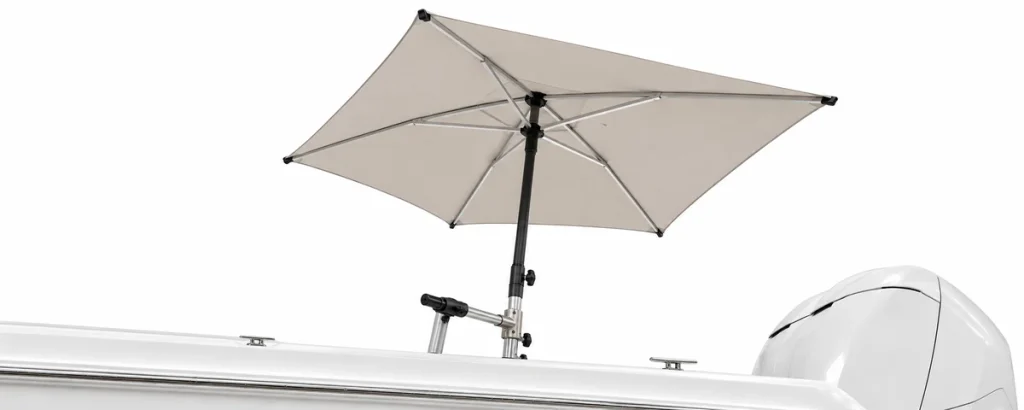
Boat umbrellas provide portable shade for fishing boats, pontoon boats, and other recreational vessels. As part of the broader outdoor umbrella product range, they can be installed in different locations, including boat rails, decks, and compatible rod holders.
China’s outdoor product supply chain brings together canopy fabric production, metal frame manufacturing, mounting hardware, and assembly capabilities. These resources can support different canopy sizes, materials, mounting configurations, and branding requirements, although supplier capabilities vary.
This guide explains how to compare boat umbrella types, evaluate mounting compatibility, explore customization options, and select suitable boat umbrella suppliers in China.
- Types of Boat Umbrellas
- Boat Umbrella Mounting Options and Compatibility
- Boat Umbrella Materials and Construction
- Key Boat Umbrella Specifications Buyers Should Confirm
- Custom Boat Umbrellas for Marine Brands
- How to Evaluate Boat Umbrella Suppliers in China
- Quality Control and Testing for Boat Umbrellas
- Conclusion
- References
- FAQ
Types of Boat Umbrellas
A boat umbrella, also known as a marine umbrella, is a portable sunshade designed to provide sun protection on recreational boats. Unlike a conventional outdoor umbrella, its installation depends on available mounting points, such as boat railings, deck sockets, or compatible fishing rod holders.
Boat umbrellas are available in different canopy shapes and support configurations. Common designs include square and round canopies, while removable models offer portable boat shade that can be taken down and stored when not in use.
Square Boat Umbrellas
Square boat umbrellas provide a broad shade area with relatively straight edges. They can be suitable for covering seating areas or cockpit spaces where a more rectangular shade layout is preferred. When selecting a boat cockpit umbrella, buyers should check canopy clearance and pole placement so the installed assembly does not obstruct access, controls, or visibility.
Round Boat Umbrellas
Round boat umbrellas feature a traditional circular canopy and come in different sizes. They can provide localized shade for seating areas, fishing positions, and other spaces on recreational boats.
Center-Pole and Offset Designs
Some boat umbrellas use a central support pole, while others position the support away from the center of the canopy. These configurations affect where the umbrella can be installed and how much usable space remains underneath.
For B2B buyers, canopy shape and support configuration should be considered separately from mounting compatibility. Umbrellas with similar canopies may require different mounting hardware depending on the boat’s structure.
Boat Umbrella Mounting Options and Compatibility
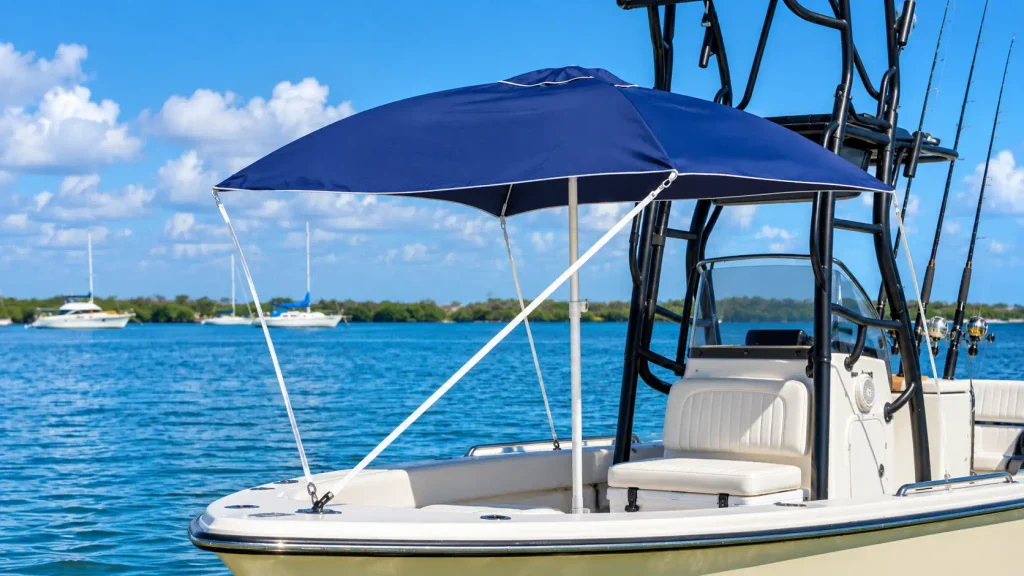
The mounting system is a key consideration when sourcing boat umbrellas. It must fit the boat’s structure, support the umbrella pole, and remain secure under the manufacturer’s permitted operating conditions.
Rail-Mounted Boat Umbrellas
Rail-mounted umbrellas use clamps or brackets attached to boat railings. Buyers should confirm rail dimensions, clamp design, locking mechanisms, and compatibility with round or square rails. For a pontoon umbrella mount, confirm the actual rail profile and dimensions, available clamping space, and clearance around seating and gates. An umbrella for a pontoon boat should be checked against the intended installation rather than assumed to fit from the boat type alone.
Removable clamp-on mounts can also provide a no-drilling installation option.
Deck-Mounted Boat Umbrellas
Deck-mounted umbrellas use a socket or base secured to the boat’s deck. Some designs allow the umbrella pole to be removed while the base remains installed.
Check the mounting position, structural support, pole dimensions, fasteners, and sealing requirements.
Rod Holder-Mounted Boat Umbrellas
Some boat umbrellas fit compatible fishing rod holders, but compatibility is not universal.
Verify pole diameter, insertion depth, locking or gimbal-pin requirements, and whether the installed umbrella interferes with fishing activities.
Boat Seat and Pedestal Mounting
Some buyers request umbrellas that fit boat seat holes or pedestal mounts. These applications require verification of seat base construction, post dimensions, and connection methods.
Compatibility should be confirmed through technical drawings or installation samples rather than assumed from standard seat fittings.
Mounting Compatibility Checks Before Ordering
In one of our boat umbrella sourcing projects, the initial specification included a 130 × 130 cm square canopy and a two-section removable pole approximately 1,500 mm long, with a proposed diameter of 20 mm. During discussions with the supplier, they recommended increasing the pole diameter to at least 25 mm for structural reasons.
The proposed diameter change required a compatibility check between the umbrella pole and the intended mounting hardware before the final configuration could be confirmed. A change in pole diameter could also require adjustments to the socket, bracket, or connecting components.
For a similar specification change, keep the original and revised dimensioned drawings, the supplier’s stated reason, and the buyer’s approval in the project record. Check that the sample, pole connection, and mounting hardware all use the same approved revision. The dimensions in this example describe one project discussion; they are not a universal specification or a verified load rating for boat umbrellas.
Before approving samples or placing an order, buyers should confirm:
- Intended mounting location and boat structure
- Rail, socket, rod holder, or pedestal dimensions
- Final pole diameter and connection details
- Required clamps, brackets, bases, and fasteners
- Installation, removal, and storage requirements
- Stability checks and restrictions on use in wind or while underway
The mounting system should be evaluated together with the complete umbrella design. Changes to the pole or supporting structure should trigger a review of mounting compatibility before sample approval.
Boat Umbrella Materials and Construction
Boat umbrellas are exposed to sunlight, moisture, and potentially saltwater environments. Buyers should evaluate canopy fabrics, supporting frames, poles, and mounting hardware based on the intended marine application.
Canopy Fabric
Common fabric options include UV-treated polyester and solution-dyed acrylic. Polyester offers flexibility in colors and specifications, while solution-dyed acrylic is often selected for its color retention and outdoor durability.
UV protection is particularly important for boat umbrella canopies. Buyers should confirm the fabric’s UV protection claims and, when necessary, request relevant test reports from the supplier. Water resistance, colorfastness, and stitching quality should also be considered. ISO 105-B02:2014 addresses colour fastness to artificial light; it does not establish a UPF rating.
Umbrella Frame and Ribs
Boat umbrella frames may use fiberglass or aluminum ribs, depending on the design. Fiberglass provides flexibility under bending loads, while aluminum offers a lightweight, relatively rigid structure.
Frame reliability also depends on rib connections, hinges, and overall construction. Material selection alone does not establish wind resistance.
Umbrella Pole
Aluminum poles are commonly used in portable umbrella designs because of their relatively low weight and corrosion resistance.
Pole diameter, wall thickness, surface treatment, and connection details all need review. For two-section removable poles, joint strength and locking reliability are particularly important.
Mounting Clamps, Hardware, and Fasteners
Boat umbrella mounting hardware may include rail clamps, brackets, bases, stainless steel fasteners, and plastic connectors. Buyers should confirm clamp dimensions, material specifications, locking mechanisms, and compatibility with the intended mounting structure.
For boat umbrellas intended for offshore fishing boats or other saltwater applications, salt spray testing is recommended for critical metal mounting components, particularly clamps, brackets, and fasteners, to assess corrosion resistance using an agreed method such as ISO 9227:2022. Salt spray results do not predict service life in the actual marine environment.
Where stainless steel is specified, buyers should distinguish between grades such as 304 and 316 rather than assuming all stainless steel components offer the same corrosion resistance.
Material specifications and test reports should be reviewed against the intended operating environment before sample approval.
Key Boat Umbrella Specifications Buyers Should Confirm
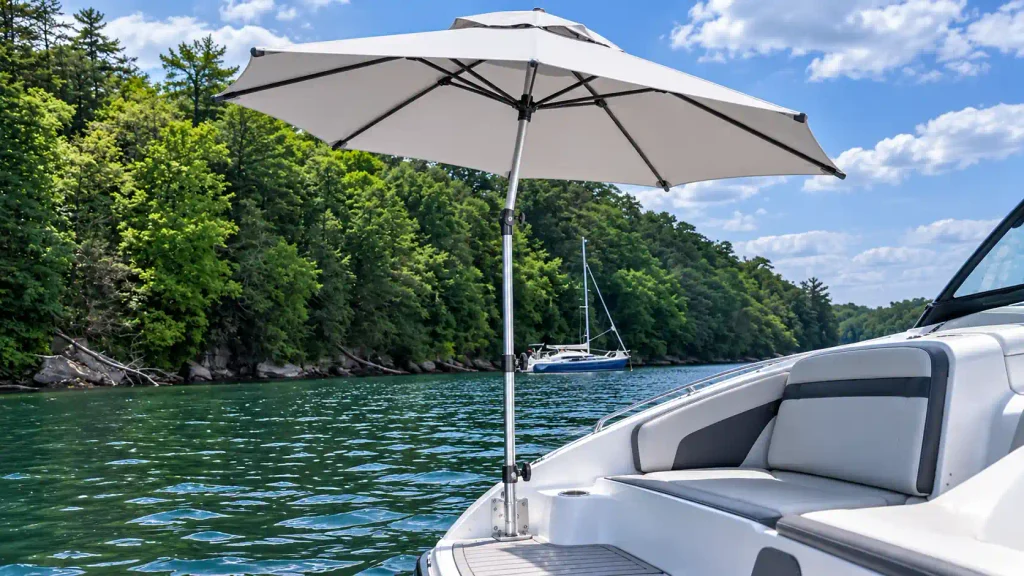
Provide a clear specification sheet when requesting quotations from boat umbrella suppliers. Canopy dimensions alone are not enough to compare quotations, as differences in construction, mounting requirements, portability, and packaging can affect product costs.
| Specification | What Buyers Should Confirm |
|---|---|
| Canopy Size & Shape | Square or round design, overall dimensions, and required shade coverage |
| Pole Dimensions | Overall length, tube diameter, wall thickness, and number of sections |
| Height Adjustment | Fixed or adjustable height, adjustment range, and locking mechanism |
| Mounting Compatibility | Mounting location, pole connection dimensions, and required installation hardware |
| Portability & Storage | Two-section removable or telescopic pole, disassembled length, ease of assembly, and storage space requirements |
| Product Weight | Net weight and gross weight |
| Wind Resistance | Available stability or wind-load test information and operating restrictions |
| Packaging | Individual packing method, carton dimensions, carrying bag options, and protective packaging |
Portability is particularly important for removable boat umbrellas. A two-section pole can make transportation and onboard storage more convenient, but buyers should confirm the length of each section, the reliability of the connecting joint, and whether a carrying bag is included.
For custom boat umbrellas, buyers should request dimensioned drawings and confirm the final specifications before sample production. Suppliers should also clarify whether the umbrella must be folded or removed while the boat is underway.
A consistent specification sheet makes it easier to compare quotations and identify differences between suppliers.
Custom Boat Umbrellas for Marine Brands
Marine brands, importers, and distributors can develop custom or branded boat umbrellas to meet specific product requirements, branding needs, and mounting applications.
Common customization options include:
- Canopy Colors, Fabrics, and Logos: Custom canopy colors, fabric materials, UV protection requirements, and water-resistant finishes. Logos are typically printed on the umbrella canopy. Confirm logo placement, size, and printing methods during sample approval.
- Canopy Size and Shape: Square or round designs with dimensions tailored to the intended shade coverage.
- Frame and Pole Design: Rib configurations, pole diameter, length, and removable or adjustable sections.
- Mounting Hardware: Custom clamps, brackets, bases, and connection dimensions for specific boat installations.
- Packaging: Private label packaging, instruction manuals, and branded carrying bags.
For OEM and private label boat umbrella projects, buyers should confirm which modifications can use existing components and which require new tooling or product development.
Minimum order quantities (MOQs), sample costs, and production lead times may vary depending on fabric availability, logo printing methods, and structural customization requirements.
Commercial Terms to Confirm Before Ordering
- MOQ by Configuration: Ask whether the minimum applies to the total order or separately to each canopy size, fabric color, logo design, and mounting option. Confirm any separate minimum for custom clamps or brackets before deciding the product mix.
- Sample and Production Schedule: Request separate timings for drawings, tooling, complete assembly samples, and bulk production. Confirm when the production lead time starts and whether it includes mounting hardware procurement, testing, and final inspection. Align the shipment plan with the latest component readiness date.
- Included Installation Parts: Require an itemized quotation and packing list identifying the umbrella, clamp or base, adapters, fasteners, and instructions. Confirm which parts are included, priced separately, or supplied by the buyer, and who verifies the complete installation fit.
- Tooling and Development Costs: If a custom mount requires new tooling, confirm the one-time charge, ownership, storage, maintenance, and access for repeat orders. Agree on how drawing revisions affect sample costs, tooling charges, and approval timing before authorizing development.
How to Evaluate Boat Umbrella Suppliers in China
When sourcing boat umbrellas from China, buyers should look beyond product designs and quoted prices. Some umbrella manufacturers have the capability to produce canopies, frames, and poles but do not manufacture the specialized mounting clamps and brackets required for boat installations.
Three factors deserve particular attention:
- Umbrella Manufacturing Capabilities: Prioritize suppliers with established production capabilities for umbrella canopies, frames, and poles, rather than relying solely on product trading or assembly services.
- Mounting Hardware Coordination: Some umbrella factories do not produce marine mounting clamps or brackets in-house. Ask the umbrella manufacturer how it sources and coordinates these components through suitable hardware suppliers.
- Complete Product Compatibility: The umbrella manufacturer should take responsibility for coordinating pole dimensions, mounting connections, and hardware compatibility, ensuring that the components can be assembled and installed together.
For custom boat umbrella projects, a practical approach is to work with an umbrella manufacturer as the main supplier and let them coordinate the necessary mounting hardware.
This helps reduce the risk of mismatched components and gives buyers a single point of responsibility for the complete boat umbrella assembly.
Quality Control and Testing for Boat Umbrellas
Boat umbrella quality control should cover the canopy, frame, pole, and mounting hardware as a complete assembly. For marine applications, buyers should pay particular attention to UV protection, corrosion resistance, and mounting stability.
Key inspection and testing points include:
- Canopy Fabric and Stitching: Check fabric consistency, stitching quality, and seam strength. Where UV protection is specified, request relevant test reports and confirm that they match the fabric used in production.
- Frame and Pole Connections: Inspect rib joints, hinges, removable pole connections, and locking mechanisms for proper assembly and operation.
- Mounting Compatibility: Verify that clamps, brackets, and bases match the approved pole dimensions and intended mounting points.
- Corrosion Resistance: For saltwater applications, request appropriate salt spray test results for critical metal components, particularly mounting clamps, brackets, and fasteners.
- Complete Assembly and Stability: Assemble the canopy, pole, and mounting hardware together to check fit, connection security, and stability. Confirm any operating restrictions, including use while the boat is underway.
- Packaging Inspection: Check component completeness, protective packaging, carrying bags, and carton condition before shipment.
Routine factory inspections should be distinguished from laboratory testing. UV protection and corrosion-resistance claims should be supported by relevant test reports, while assembly and compatibility should be checked against the approved sample.
Material readiness is another important production consideration. Buyers should urge suppliers to monitor component availability and delivery schedules throughout production, particularly for custom mounting clamps. These specialized parts can become a production bottleneck: even if the canopy and frame are finished, missing or delayed clamps may prevent final assembly and shipment.
Conclusion
Sourcing boat umbrellas from China involves more than selecting a canopy design. Buyers should ensure that the umbrella frame, pole, and mounting hardware are compatible, while confirming material quality, product specifications, and testing requirements.
Working with an experienced umbrella manufacturer to coordinate the complete assembly can help reduce sourcing risks. JingtuOutdoor supports overseas brands, importers, and distributors with boat umbrella sourcing in China. If you need assistance with supplier sourcing, product customization, or sample approval, feel free to contact us.
References
- ISO 9227:2022 — Corrosion tests in artificial atmospheres — Salt spray tests. Describes salt spray test methods for assessing metallic materials and protective coatings, relevant to metal mounting clamps, brackets, and fasteners.
- ISO 105-B02:2014 — Textiles — Tests for colour fastness — Part B02: Colour fastness to artificial light: Xenon arc fading lamp test. Provides a method for evaluating textile colour fastness to artificial light, relevant to canopy fabric colour retention.
FAQ
1. What types of boat umbrellas are available from Chinese suppliers?
Options include round or square canopies, center-pole or offset designs, and removable poles. Mounting arrangements may use rail clamps, deck sockets, compatible rod holders, or verified seat and pedestal connections. Select the canopy structure and mounting system separately: suitability for fishing boats, pontoon boats, or other recreational vessels depends on the actual installation dimensions and available space.
2. Can boat umbrellas be customized for different boat types?
Yes, depending on the supplier’s capabilities. Custom boat umbrellas may include different canopy sizes, colors, fabrics, printed logos, pole designs, mounting hardware, and packaging. Provide drawings or measurements of the intended installation rather than relying on the boat type alone. Confirm which changes use existing components, which require development, and approve a complete sample before mass production.
3. What should buyers check when selecting a boat umbrella mounting system?
Confirm the intended mounting location, pole diameter, clamp or socket dimensions, and available installation space. Check the supporting boat structure, fasteners, locking mechanism, and corrosion resistance of the hardware. Request drawings and verify the complete assembly with the intended mounting points. Obtain the supplier’s operating restrictions, including wind conditions and whether the umbrella must be removed while underway.
4. Which materials are suitable for boat umbrellas?
Canopy options include UV-treated polyester and solution-dyed acrylic; ribs may use fiberglass or aluminum, with aluminum poles and specified fasteners. Choose materials according to UV exposure, moisture, saltwater exposure, durability, and maintenance needs. Confirm fabric performance, metal grades, coatings, and connection details. No material alone establishes marine suitability or wind resistance; review relevant evidence for the intended environment.
5. What should buyers verify before approving a boat umbrella sample?
Assemble the canopy, pole, and mounting hardware together. Verify installation fit, shade coverage, opening and closing, removable joints, locks, and component completeness against approved drawings. Check material specifications, stitching, surface finish, and packaging. Agree on applicable performance tests and acceptance criteria, and review reports for the specified materials or components; a visual sample check does not establish UV protection or corrosion resistance.
6. How can buyers evaluate boat umbrella suppliers in China?
Review umbrella production experience, customization capability, sample quality, inspection procedures, relevant test records, packaging, and delivery planning. Confirm who sources mounting hardware and takes responsibility for complete assembly compatibility. Ask how component changes and delayed clamps are managed before shipment. JingtuOutdoor provides sourcing and project coordination, including supplier selection and sample follow-up; it is not a boat umbrella manufacturing factory.