
Camping Cookware Suppliers in China
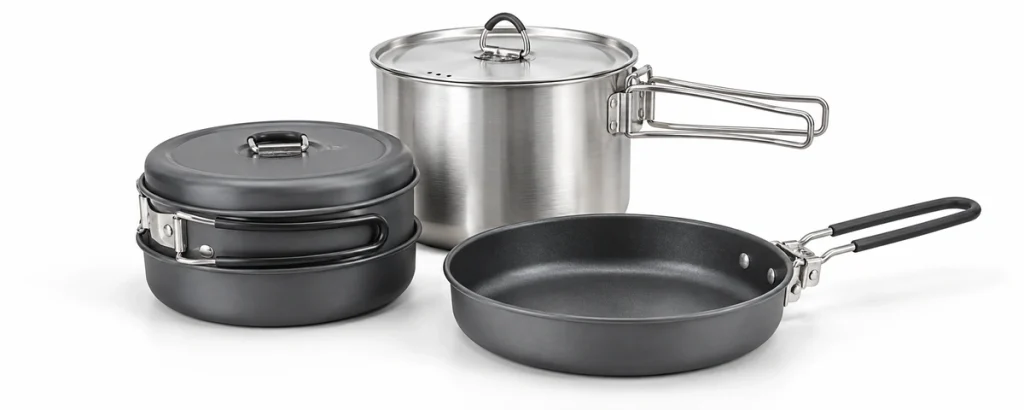
Camping cookware includes camping pots, frying pans and nesting cookware sets designed for preparing meals outdoors. As part of a broader range of camping products and outdoor products, these cooking sets help brands and importers meet different outdoor cooking needs while balancing packed size, weight and durability.
When sourcing camping cookware from China, buyers need to specify more than the material name. Construction, surface finish, handle design and cookware set configurations all affect how products should be compared, sampled and quoted.
This guide helps you evaluate camping cookware suppliers in China, compare product options and prepare a clearer purchasing brief—from material and capacity choices to sample checks, packaging and order requirements.
- Camping Cookware Types
- Camping Cookware Set Configurations
- Camping Cookware Materials and Coatings
- Custom Camping Cookware Options
- How to Evaluate Camping Cookware Suppliers in China
- Wholesale Camping Cookware: MOQ, Samples and Lead Times
- Food-Contact Compliance Requirements for Camping Cookware
- Pre-Shipment Inspection and Shipping Preparation for Camping Cookware
- Conclusion
- Camping Cookware Sourcing FAQs
Camping Cookware Types
Camping cookware includes a range of pots, frying pans and other cooking vessels designed for outdoor meal preparation. As an essential part of a broader camping kitchen setup, these products serve different cooking needs, from boiling water to preparing complete meals. Choosing the right cookware depends on its intended use, capacity, dimensions, handle design and compatibility with other components.
Camping Pots
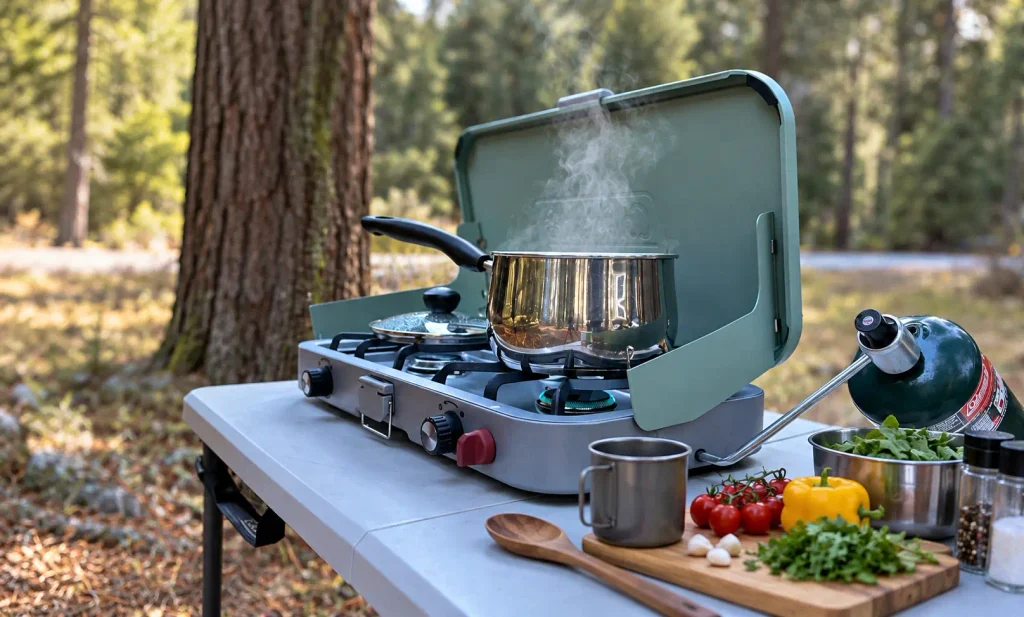
Camping pots are commonly used for boiling water, preparing soups, cooking rice and making one-pot meals. They are available in different shapes and capacities to suit various outdoor cooking needs.
Some camping pots are designed for individual use, while larger models provide more cooking capacity. Depending on the design, they may feature fitted lids, folding handles or detachable pot grippers.
Camping Frying Pans
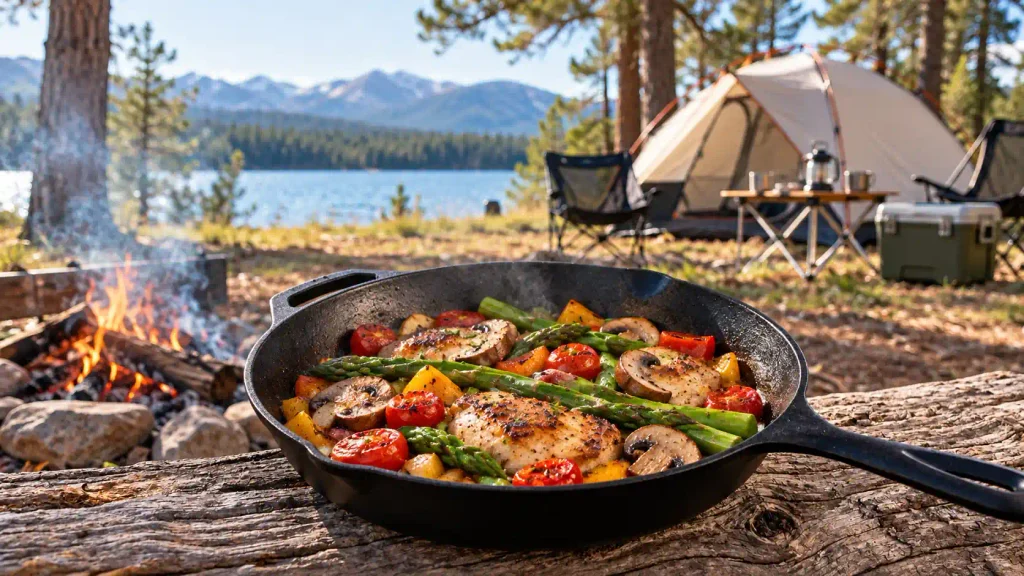
Camping frying pans provide a wider cooking surface for preparing eggs, vegetables, meat and other foods that require frying or sautéing.
Compared with deeper cooking pots, camping pans typically have shallower sides, making them suitable for turning and handling food during cooking. Designs may include fixed, folding or detachable handles to accommodate different cooking and storage requirements.
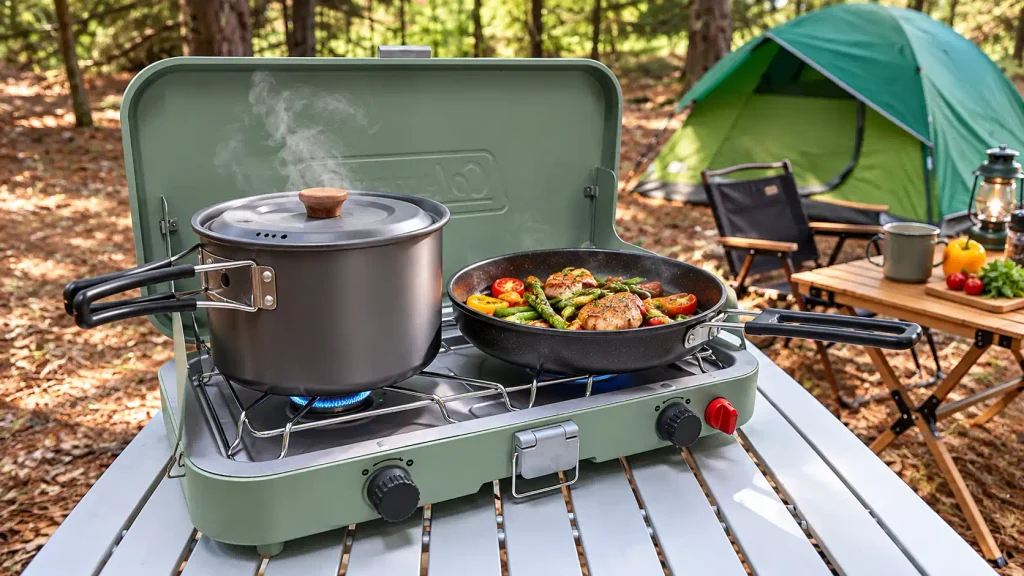
Camping pots and pans can also be offered as complementary cooking vessels. Combining a deeper pot with a frying pan allows users to prepare different types of meals without relying on a single cooking vessel.
Buyers can also include camping kettles for boiling water and preparing tea or coffee. The right product mix depends on their target market positioning, customer preferences and intended cooking applications.
Camping Cookware Set Configurations
Camping cookware set configuration refers to the combination of cooking vessels, accessories and storage components included in a complete set. A camping cooking set may contain pots, frying pans, lids, detachable handles, dining accessories and carrying bags, depending on its intended use. Different configurations determine what the set includes, how its components work together and how they are packed for storage and transport.
Camping Cookware Sets and Included Components
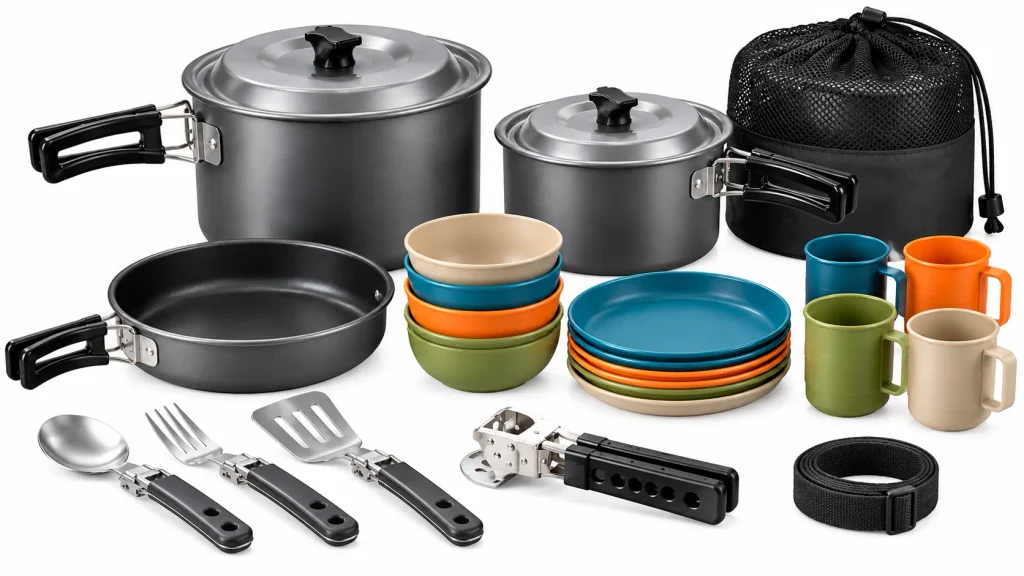
Camping cooksets vary in the number and type of components included. A camping pot set may contain pots of different capacities with matching lids and detachable handles, while broader cookware sets may combine pots and pans with bowls, plates, cups or utensils.
For example, the GSI Outdoors Pinnacle Ceramic Camper includes cooking vessels and dining accessories in one set. However, the contents of a cookware set depend on its specific design, and sets marketed for the same number of users do not necessarily contain identical components.
Buyers should review the complete component list rather than rely only on the advertised set size or total number of pieces.
Nesting Camping Cookware Sets
A nesting cookware set is designed so that compatible components fit inside one another for compact storage. Depending on the design, pots, pans, lids and selected accessories may be arranged together within the packed set.
Nesting arrangements vary between products. Buyers should check how the components fit together, whether handles or accessories need to be removed, and the dimensions of the complete packed set.
The packed dimensions should be confirmed with all intended components included, rather than estimated from the size of the largest pot alone.
Comparing Camping Cookware Set Configurations
Two camping cookware sets may appear similar but differ in component quantities, capacities and accessories. Before comparing supplier quotations, buyers should establish a consistent bill of materials (BOM) for the required configuration.
| Component | Specifications to Confirm |
|---|---|
| Cooking pots | Quantity, capacity and dimensions |
| Frying pans | Quantity, diameter and dimensions |
| Lids | Quantity, size and compatibility |
| Handles | Fixed, folding or detachable design |
| Dining accessories | Bowls, plates, cups and utensils, if included |
| Storage accessories | Carry bags, cases or other included items |
| Complete set | Total component count and packed dimensions |
Confirm the final component list and specifications before ordering, and choose the appropriate route under Custom Camping Cookware Options.
Camping Cookware Materials and Coatings
Aluminum cookware is widely represented in camping cooksets, while stainless steel and titanium serve different durability and weight requirements. Base materials, surface treatments and non-stick coatings are separate specifications that should be considered when selecting products.
| Material / Product Type | Key Characteristics | Sourcing Considerations |
|---|---|---|
| Aluminum Cookware | Lightweight with good thermal conductivity; available with anodized or hard-anodized surfaces | Confirm aluminum grade, body thickness and surface treatment |
| Hard-Anodized Aluminum with Non-Stick Coating | Combines an anodized aluminum body with an additional cooking-surface coating, depending on the design | Confirm the coating system, application area and technical documentation |
| Stainless Steel Cookware | Strong and corrosion-resistant; some designs use composite bases for improved heat distribution | Verify steel grade, body thickness and single-layer or composite base construction |
| Titanium Cookware | Lightweight and corrosion-resistant; commonly used in backpacking cookware | Confirm material grade, dimensions, weight and intended cooking applications |
Non-stick coatings and anodized surface treatments are not interchangeable. Buyers should identify the base material, surface treatment and coating separately, and verify applicable food-contact requirements and performance claims using relevant documentation.
When building a camping cookware product range, buyers should select and combine different materials, surface treatments and cookware set configurations according to their target markets, customer preferences and intended price tiers. This allows brands to develop product offerings for different market segments rather than relying on a single material or configuration.
Custom Camping Cookware Options
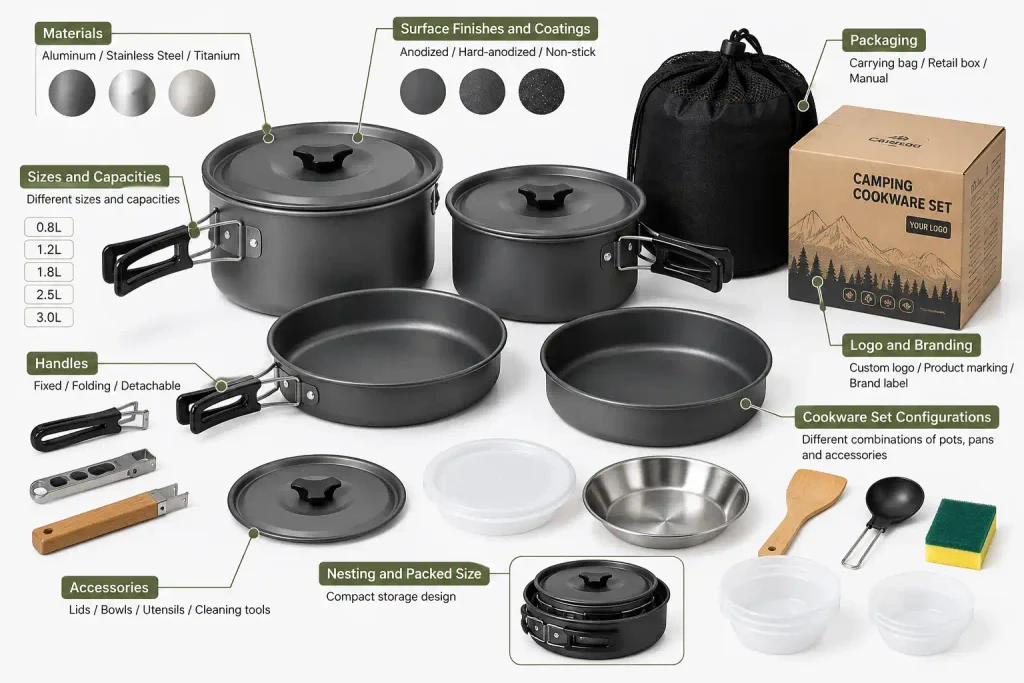
Brands and importers can customize camping cookware based on their target markets, product positioning and customer preferences. Common customization options include:
- Materials and Coatings: Aluminum, stainless steel, titanium, surface finishes and available non-stick coatings.
- Sizes and Capacities: Available pot and pan sizes, capacities and dimensions.
- Handles and Accessories: Fixed, folding or detachable handles, lids and compatible accessories.
- Nesting and Packed Size: Component arrangements and compact storage configurations.
- Cookware Set Configurations: Different combinations of existing pots, frying pans and accessories.
- Logo and Branding: Custom logos, product markings and brand labels.
- Packaging: Branded retail boxes, carrying bags and instruction manuals.
Private Label and New Product Development
Private Label: Buyers can select and combine existing cookware designs, capacities, handles and accessories from a supplier’s product range, then add their own branding and packaging. This provides customization without necessarily developing new tooling.
New Product Development: If a proposed cookware design cannot be achieved using existing products or tooling, new molds or tooling may be required. Buyers should discuss technical feasibility, development costs, tooling ownership and sampling requirements with suppliers before proceeding.
Customization options and minimum order quantities depend on supplier capabilities and should be confirmed before ordering.
How to Evaluate Camping Cookware Suppliers in China
When evaluating camping cookware manufacturers and suppliers in China, buyers should consider product specialization, manufacturing capabilities and quality control rather than price alone.
Some camping stove manufacturers also supply camping cookware as part of their outdoor cooking product range. If you already work with a reliable camping stove supplier, consider exploring their cookware options first. However, their cookware manufacturing capabilities and product quality should still be verified.
Key factors to evaluate include:
- Product Specialization: Check whether the supplier offers aluminum, stainless steel or titanium cookware, including camping pots, frying pans and cookware sets.
- Manufacturing Capabilities: Verify production processes, surface treatments and coating capabilities, including which operations are outsourced.
- Customization Capabilities: Confirm available private label options, cookware set configurations and new product development capabilities.
- Quality Control: Review material specifications, coating inspection procedures, handle assembly checks and finished-product inspection records.
- Food-Contact Compliance: Request relevant material declarations and test reports according to the destination market and intended product use.
- MOQ and Lead Times: Compare minimum order quantities, sampling arrangements, production capacity and delivery schedules.
For wholesale camping cookware orders, buyers should compare quotations based on consistent product specifications, packaging requirements and quality standards. When working with a new supplier for the first time, always request samples and approve them before proceeding with bulk production.
Wholesale Camping Cookware: MOQ, Samples and Lead Times
When sourcing wholesale camping cookware from China, buyers should confirm minimum order quantities (MOQs), sampling arrangements and production lead times. These requirements vary depending on the supplier, product specifications and customization needs.
Key purchasing considerations include:
- Minimum Order Quantity (MOQ): Different camping cookware manufacturers have different MOQ requirements. If your initial order quantity is below a supplier’s MOQ, consider negotiating a smaller trial order. If the supplier has demonstrated strong manufacturing capabilities and reliable quality control, and you expect future order volumes to grow, accepting a higher unit price for the initial order may be worthwhile.
- Samples: Request samples that match your required materials, dimensions, surface finishes and cookware set configurations. Confirm sample costs, preparation times and approval requirements before placing an order.
- Production Lead Times: Confirm production schedules for standard products, private label orders and newly developed designs. Allow additional time for sample approval or tooling development when necessary.
- Quotations: Request pricing based on confirmed product specifications, order quantities, packaging requirements and Incoterms. For smaller trial orders, clarify any additional costs resulting from quantities below the standard MOQ.
- Order Confirmation: Finalize product specifications, approved samples, packaging details and delivery requirements before starting bulk production.
Production Follow-Up: Once an order is placed, buyers should monitor production progress at key milestones rather than waiting until the delivery date. For example, one practical approach for an agreed 30-day production lead time is to follow up with the supplier around days 10, 20 and 25 to check production status, identify potential delays and confirm the expected completion date.
Food-Contact Compliance Requirements for Camping Cookware
Camping cookware comes into direct contact with food, so buyers must verify compliance with the regulations applicable to their destination markets. Requirements vary depending on the cookware material, coating, food-contact components and intended use.
Key regulatory considerations include:
- United States — FDA Requirements: Verify that food-contact materials and coating components comply with applicable FDA regulations or other valid regulatory authorizations. There is no single FDA certification covering all camping cookware.
- European Union — Food-Contact Materials: Regulation (EC) No 1935/2004 establishes general safety requirements, while Regulation (EC) No 2023/2006 covers good manufacturing practices. Additional material-specific and national requirements may apply.
- Non-Stick Coatings and BPA: For coated cookware sold in the EU, assess the applicability of Regulation (EU) 2024/3190, as corrected by Regulation (EU) 2026/250, concerning BPA and certain other bisphenols.
- Supplier Documentation: Request relevant material specifications, food-contact compliance declarations and test reports. Verify that the documents cover the actual product, coating, intended use and destination market.
Buyers should confirm the applicable requirements before ordering and should not assume that a generic FDA certificate or a test report for a different product establishes compliance.
Pre-Shipment Inspection and Shipping Preparation for Camping Cookware
One practical approach is to start planning pre-shipment inspection and shipping arrangements 3–5 days before the expected production completion date, adjusting the schedule to the order and inspection requirements. Buyers should coordinate inspection schedules, shipping arrangements and required documents in advance to avoid unnecessary delays. Final inspection should be completed once the goods are ready, before shipment approval.
Key checks include:
- Product Quality: Inspect cookware surfaces, coatings, handles, lids and accessories for visible defects or assembly issues.
- Product Specifications: Verify dimensions, capacities, quantities and cookware set configurations against approved samples and order requirements.
- Protective Packaging: Check that pots, pans and accessories are properly protected against scratches and damage during transportation.
- Cartons and Labels: Confirm packing quantities, carton dimensions, weights, shipping marks and product labels.
- Shipping Documents: Review the packing list, commercial invoice, delivery arrangements and other required documents.
Any issues identified during inspection should be resolved before the goods are released for shipment.
Conclusion
Sourcing camping cookware from China requires more than comparing prices. Buyers should select suitable materials, cookware types and set configurations based on their target markets, then evaluate suppliers’ manufacturing capabilities, customization options and quality standards. Clear specifications, approved samples and timely production follow-up help reduce purchasing risks and avoid unnecessary delays.
At JingtuOutdoor, we help outdoor brands, importers and wholesalers source camping cookware from China by coordinating supplier selection, product customization, sampling, production follow-up and pre-shipment inspections. If you are developing a camping cookware range or looking for reliable suppliers, contact us to discuss your sourcing requirements.
Camping Cookware Sourcing FAQs
What is the MOQ for wholesale camping cookware?
Minimum order quantities vary by manufacturer, cookware material, product design and customization requirements. Some suppliers may accept smaller trial orders at a higher unit price. Buyers should confirm the MOQ for each product or cookware set before requesting a final quotation.
Can I sell camping cookware under my own brand?
Yes. Many camping cookware suppliers offer private label options, including custom logos, branded packaging and combinations of existing cookware products. More extensive changes to product construction or design may require additional development work or tooling. Available options depend on the supplier’s capabilities.
Can I combine different camping pots and pans into one cookware set?
Yes, provided the components are compatible. Buyers can discuss combinations of camping pots, frying pans, lids, handles and accessories with suppliers. For nesting camping cookware sets, it is important to verify component fit, packed dimensions and protective packaging before confirming the final configuration.
How do I choose a camping cookware manufacturer in China?
Start by checking the supplier’s product specialization, manufacturing capabilities and quality control procedures. Ask which production processes are handled in-house and which are outsourced. Compare suppliers using consistent product specifications, and request samples before committing to a bulk order.
What food-contact documents should I request for camping cookware?
Request material specifications, relevant food-contact compliance declarations and applicable test reports for the intended destination market. Requirements depend on the cookware materials, coatings and intended use. Buyers should confirm that the documents cover the actual product rather than relying on a generic FDA certificate.
Should I approve camping cookware samples before bulk production?
Yes, especially when working with a new supplier. Samples should be checked against the agreed materials, dimensions, surface finishes, handles and cookware set configuration. Confirm any required corrections and approve the final sample before bulk production begins to reduce the risk of receiving products that do not meet your specifications.
References
- GSI Outdoors — Pinnacle Ceramic Camper: Product specifications and included cookware and dining components.
- MSR — Backpacking Cookware 101: Titanium vs. Aluminum vs. Stainless Steel: Material characteristics and outdoor cooking applications.
- U.S. FDA — Understanding How the FDA Regulates Substances that Come into Contact with Food: Food-contact substance authorizations and intended conditions of use.
- European Commission — Food Contact Materials: Legislation: EU framework requirements, good manufacturing practice and material-specific measures.