
Private Label Camping Chairs for Outdoor Brands
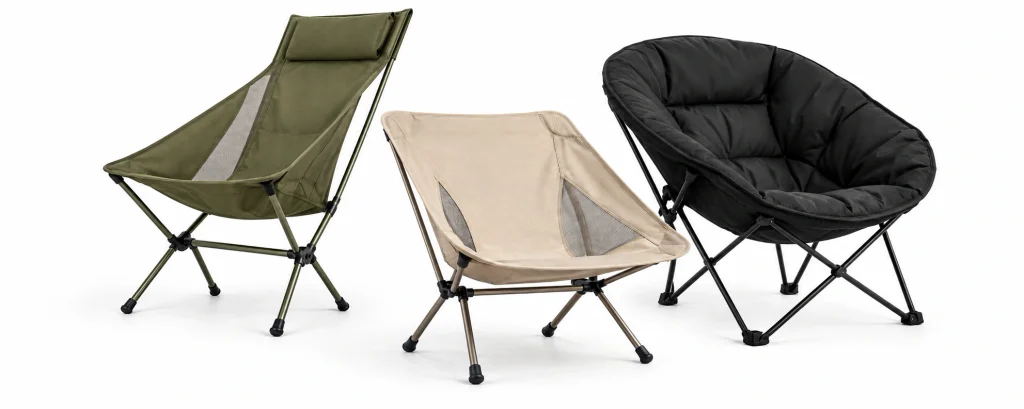
Building your own camping chair brand does not always require developing a completely new product from scratch. For many outdoor brands, private label offers a faster and less complex route by starting with an existing chair and customizing the color, logo, labels, accessories, and packaging.
But private label is more than simply adding a logo. Brands still need to confirm the product platform, customization scope, sample approval, MOQ, SKU planning, and repeat-order consistency, while also knowing when the project has moved beyond private label into OEM or full product development.
This guide explains the key points outdoor brands should consider when launching private label camping chairs, including product selection, branding, suppliers, samples, packaging, and major risks.
- What Does Private Label Mean for Camping Chairs?
- Which Camping Chairs Are Suitable for Private Label?
- How to Choose the Right Camping Chair for Your Brand
- What Can Be Customized on a Private Label Camping Chair?
- Choose the Right Supplier
- MOQ and SKU Planning
- Confirm Pricing and Payment Terms
- Packaging and Brand Presentation
- When to Move From Private Label to Product Development
- Frequently Asked Questions
What Does Private Label Mean for Camping Chairs?
A private label camping chair is manufactured by a third-party supplier but sold under your own brand.
For example:
You choose a mature camping chair model from an existing product line.
You customize the color, logo, labels, or packaging.
You sell the product under your own outdoor brand.
Private Label vs Customization vs OEM vs ODM
You will often hear these terms:
Private Label → Build your own branded product line based on an existing product.
Customization → Change the color, fabric, logo, packaging, or selected product details.
OEM (Original Equipment Manufacturer) → A factory manufactures according to the buyer’s defined requirements, which may involve deeper specification or structural changes.
ODM (Original Design Manufacturer) → The supplier provides an existing design or product platform that the buyer can adapt and brand.
Private label is usually a good fit for outdoor brands that want to build their own product line without developing a completely new chair structure from scratch.
Which Camping Chairs Are Suitable for Private Label?
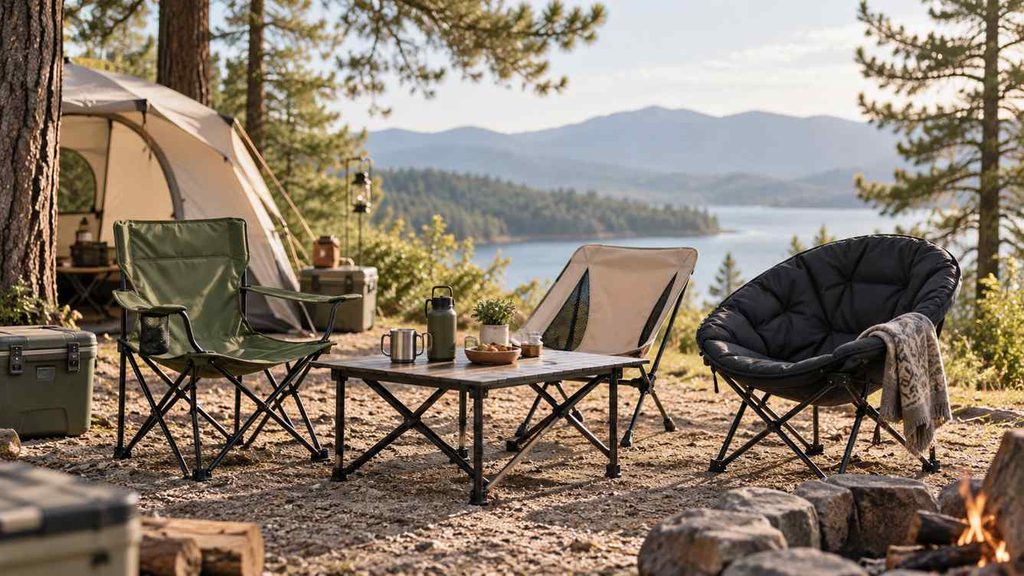
Private label works best with mature chair models that already have a stable structure and established production process.
Common options include:
Standard folding chairs — suitable for general camping and mass-market positioning.
Compact chairs — suitable for portability-focused products.
Moon chairs — offer larger fabric areas for colors and branding.
High-back chairs — suitable for brands focusing on comfort.
Director-style chairs — offer more space for accessories and visible branding.
When choosing an existing chair model, make sure it fits your brand positioning, target customer, price range, and intended use scenario.
How to Choose the Right Camping Chair for Your Brand
Start by defining your brand positioning and target customer, then choose an existing chair model that matches the intended price range and use scenario.
Target user — families, casual campers, backpackers, or premium outdoor users.
Use scenario — campsite, beach, RV, festival, or travel.
Price positioning — entry-level, mid-range, or premium.
For private label projects, it is usually better to choose a mature existing model and create differentiation through colors, fabrics, logos, accessories, and packaging. If the project requires changes to the frame, folding mechanism, or key components, it is moving into OEM or product development.
What Can Be Customized on a Private Label Camping Chair?
For most private label projects, customization focuses on branding, appearance, simple accessories, and packaging rather than major structural changes.
| Area | Common Customization Options |
|---|---|
| Logo and Branding | Screen printing, heat transfer, embroidery, woven labels |
| Colors and Fabrics | Fabric colors, frame colors, mesh panels, trims, stitching details |
| Accessories | Cup holders, side pockets, carry bags, headrests, simple non-structural accessories |
| Packaging | Branded carry bags, hangtags, retail boxes, cartons, barcodes, shipping marks |
If customization starts to affect the frame, folding mechanism, connectors, or other key structural parts, the project is moving beyond simple private label customization.
Choose the Right Supplier
For a private label project, the supplier should already have a stable camping chair product line and be able to support branding, packaging, sampling, and repeat orders.
Key capabilities to check include:
- Product capability: A stable camping chair range with mature structures and existing production experience.
- Private label support: Ability to manage logos, colors, labels, packaging, and sample approval.
- Supply chain coordination: Ability to coordinate fabrics, hardware, accessories, and packaging.
- Repeat-order consistency: Ability to keep materials, branding, and packaging consistent across later orders.
The final sample can also help confirm whether the supplier can execute the agreed branding and product details before bulk production.
For a broader supplier assessment, see how to evaluate camping furniture OEM/ODM manufacturers in China.
MOQ and SKU Planning
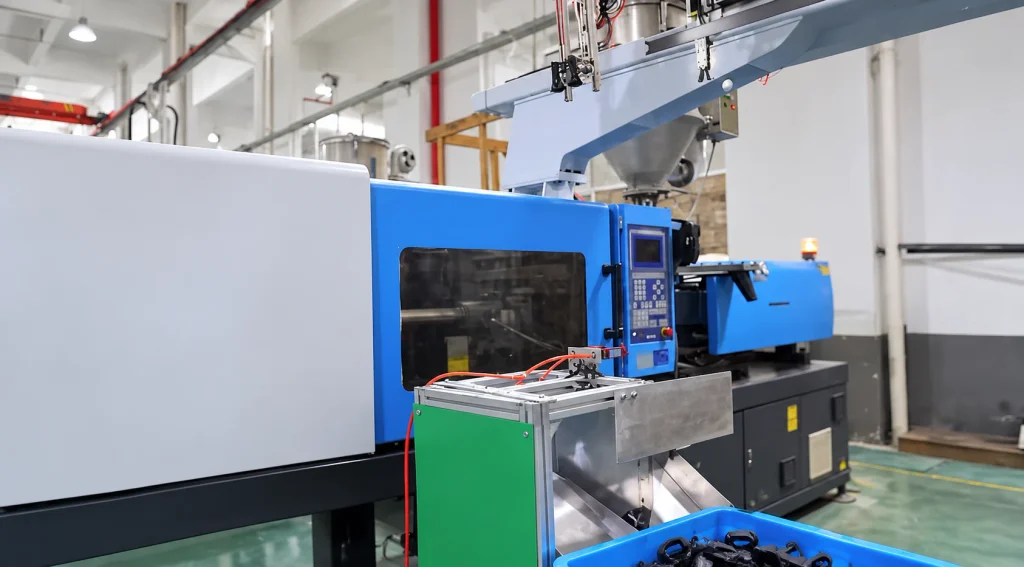
In a private label project, MOQ is the minimum order quantity, while SKU refers to different product variations such as models, colors, or packaging versions.
More SKUs usually mean more production complexity and greater MOQ pressure.
In practice, private label projects are easier to manage when starting with a small number of core products, getting the branding, quality, and cost under control first, and then expanding the SKU range based on market feedback.
Confirm Pricing and Payment Terms
For a private label project, do not ask only for a final unit price. Before discussing your own order, ask the supplier what similar camping chair projects they have completed and what cost items were involved.
Key points to confirm include:
- Reference projects: Ask for similar private label camping chair projects the supplier has handled before.
- Cost breakdown: Confirm what affected the price, such as the base chair, fabric, logo, accessories, packaging, samples, testing, or tooling.
- Comparable pricing: Use previous similar projects as a reference, while confirming what is different in your own specification.
- One-time costs: Clarify whether there are sample, tooling, printing setup, or packaging development costs.
- Payment terms: Confirm the deposit, balance, and payment milestones before production.
A previous project price should only be used as a reference, because changes in materials, branding, packaging, quantities, and specifications can change the final cost.
Packaging and Brand Presentation
For a private label camping chair, packaging is part of the brand experience, not just a way to protect the product during shipping.
| Area | What to Confirm |
|---|---|
| Carry Bag Branding | Keep the logo, brand colors, and labels consistent with the chair itself. |
| Hangtags and Labels | Confirm product information, branding, and required labels are clear and consistent. |
| Retail-Ready Packaging | Match the packaging format to the sales channel, such as retail stores, distributors, or e-commerce. |
| Carton Efficiency | Confirm carton size, packing quantity, and protection to avoid unnecessary logistics cost. |
Labeling and documentation requirements vary by target market and product type, so buyers should confirm the applicable camping furniture compliance requirements before approving packaging for mass production.
Buyers should also evaluate camping chair packaging and container loading based on the final carton dimensions and packing quantity.
Private label projects are usually easy to start, but the real test is whether the product, branding, and quality still stay consistent once you move into bulk and repeat orders.
When to Move From Private Label to Product Development
Private label works well when you are building on an existing chair. But once you need a new frame, folding mechanism, connector, or unique function, the project starts to move into product development.
At that point, a more structured camping chair product development process becomes necessary.
Summary
Private label is a practical way for outdoor brands to build a camping chair product line without developing every product from scratch. China’s established supply chain for camping chairs, fabrics, metal parts, accessories, printing, and packaging gives brands plenty of options for product selection and branding.
The key is to start with the right chair, keep customization under control, choose a capable supplier, and maintain consistency as orders move into bulk and repeat production. When the brand needs deeper structural or functional differentiation, the project should move into full product development.
JingtuOutdoor helps outdoor brands coordinate sourcing, private label, product development, and quality control projects in China. We work with buyers to connect product requirements with suitable suppliers and manage the key steps from sampling to production.
Frequently Asked Questions
What is a private label camping chair?
A private label camping chair is manufactured by a third-party supplier but sold under your own brand, usually with agreed changes to colors, logos, labels, accessories, or packaging.
What can be customized on a private label camping chair?
Common options include fabric and frame colors, logos, labels, carry bags, simple accessories, and packaging.
Is private label the same as OEM?
Not exactly. Private label usually starts with an existing product, while OEM projects may involve deeper changes to specifications, components, or structure.
What is the typical MOQ for private label camping chairs?
There is no single standard MOQ. It depends on the chair model, fabric, colors, logo method, packaging, number of SKUs, and the supplier’s production setup.
Can I use my own logo and packaging?
Yes. Custom logos, labels, carry bags, cartons, and retail packaging are common parts of private label projects.
When should I move from private label to product development?
If you need a new frame, folding mechanism, connector, major structural change, or unique function, the project is moving beyond simple private label into product development.
How can outdoor brands keep repeat orders consistent?
Use an approved sample, clear specifications, confirmed artwork and packaging requirements, and make sure any material or component changes are approved before production.