
Camping Stools from China: A Sourcing Guide
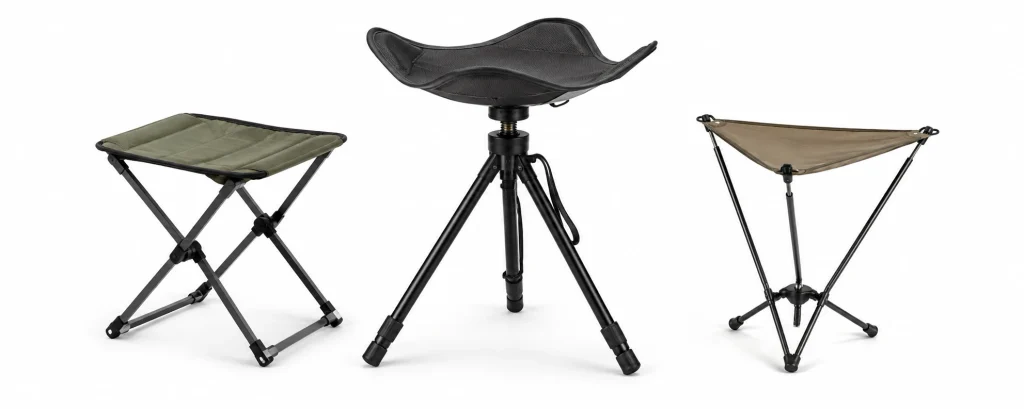
Camping stools are a common type of camping furniture, widely used for camping, hiking, fishing, picnics, and other outdoor activities. Compared with custom camping chairs and camping cots, they usually have a simpler structure and a smaller folded size, making them more suitable for situations where portability and quick setup are important.
In recent years, as camping and outdoor recreation continue to grow worldwide, demand for lightweight and portable camping stools has also increased. China has a well-established outdoor products supply chain and can provide camping stools in a wide range of structures and specifications, making it an important sourcing base for many overseas buyers.
JingtuOutdoor is a China-based sourcing company specializing in outdoor products. This guide will introduce the main types of camping stools, materials, supplier selection, and the key points you should consider when sourcing from China.
- Types of Camping Stools Supplied from China
- What Materials Are Commonly Used in Camping Stools?
- Key Camping Stool Sourcing Areas in China
- What Key Specifications Should Buyers Confirm for Camping Stools?
- What Determines the Quality of Camping Stools?
- How to Choose a Camping Stool Manufacturer in China
- What Can Be Customized on Camping Stools?
- What Compliance Requirements Should Buyers Check?
- What Should Buyers Consider for Packaging and Shipping?
- Common Risks When Sourcing Camping Stools
- What Factors Affect the Cost of Camping Stools?
- Conclusion
- Frequently Asked Questions
Types of Camping Stools Supplied from China
Chinese suppliers offer a wide range of camping stools in different structures and designs for various outdoor uses. These products are also commonly referred to as portable camping stools. They vary in frame construction, folding method, weight, and intended application, so buyers should select the right type based on their target market and product positioning.
Tripod Camping Stools
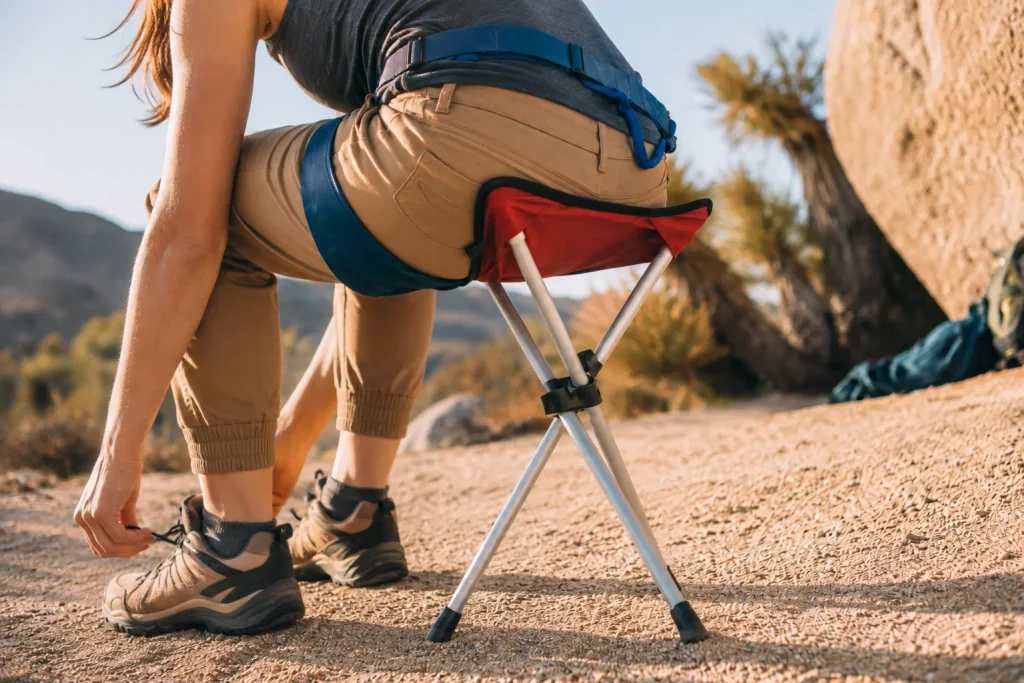
Tripod camping stools use a three-point support structure and usually fold down to a compact size. They are commonly used for camping, hiking, fishing, and short outdoor trips.
Four-Leg Folding Camping Stools
Four-leg folding camping stools typically use a four-leg or cross-frame structure and usually have a wider seat. They are one of the most common types of folding camping stools.
Ultralight Backpacking Stools
Ultralight backpacking stools focus on low weight and a compact folded size. They typically use lightweight metal frames and fabrics, making them suitable for hiking, backpacking, and other outdoor activities where the stool needs to be carried over longer distances.
Fishing Camping Stools
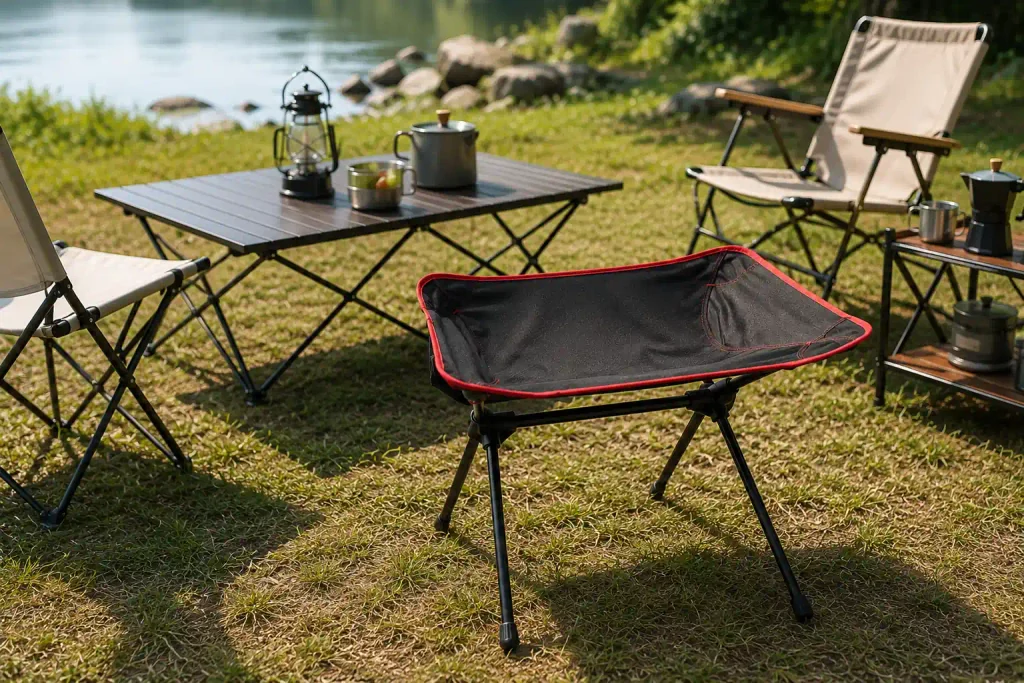
fishing camping stools are mainly used for fishing and general outdoor activities. Some models add storage bags or side pockets.
Cooler and Storage Camping Stools
Cooler and storage stools combine seating with an insulated or storage compartment. They are common for fishing, picnics, and camping.
Heavy-Duty Camping Stools
Heavy-duty camping stools usually use reinforced frames, larger tubing, or wider seats. Load capacity should still be verified through testing.
Kids Camping Stools
Kids camping stools are smaller products designed for children. Their structural safety and compliance requirements should be checked separately from adult stools.
Telescopic Stools
Telescopic stools use an extendable plastic or composite structure. They are often sold as camping stools but are better treated as a separate structural category.
What Materials Are Commonly Used in Camping Stools?
The main materials used in camping stools can be divided into frame materials and seat fabrics. Steel and aluminum alloy are common frame materials, while polyester and nylon are common fiber materials used for the seat. Oxford, ripstop, and mesh describe fabric constructions or commercial specifications rather than separate fiber types.
Steel Frames
Steel is commonly used for folding camping stool frames. Buyers should confirm the tube diameter, wall thickness, and surface treatment rather than judging product strength only by the term “steel frame.”
Aluminum Alloy Frames
Aluminum alloy is often used for camping stools designed to reduce weight. Actual performance still depends on tube specifications, frame structure, and joint design rather than the material name alone.
Polyester and Nylon Fabrics
Polyester and nylon are common fiber materials used for camping stool seats. Common constructions include Oxford, ripstop, and mesh fabrics. Buyers should confirm the fiber material, denier, fabric weight, coating, weave, and reinforcement rather than relying only on names such as “Oxford fabric.”
Fabric Construction and Performance
Oxford, ripstop, and mesh fabrics can be made from different fibers. Buyers should evaluate abrasion resistance, tear resistance, comfort, weather resistance, stitching, edge binding, and reinforcement according to the intended use.
Key Camping Stool Sourcing Areas in China
China’s camping stool supply chain is concentrated mainly in Zhejiang, especially around Jinhua, Yongkang, and Wuyi. These areas have established capabilities in metal tube processing, outdoor furniture, sewing, surface treatment, and assembly, making them suitable for sourcing folding and portable camping stools.
- Jinhua: A major area for outdoor leisure products and light industrial goods, with suppliers serving camping furniture and other portable outdoor product categories.
- Yongkang: Strong in metal processing and suitable for camping stools that require tubing, folding frames, and hardware components.
- Wuyi: An important production area for tourism and leisure products in Zhejiang, including folding chairs, outdoor furniture, and other portable camping products.
- Ningbo: More suitable as a supplementary sourcing and export area, with outdoor product suppliers, trading companies, and related supporting resources.
What Key Specifications Should Buyers Confirm for Camping Stools?
When sourcing camping stools, buyers should not compare only appearance, weight, or the supplier-stated load capacity. Several key specifications should also be confirmed because they directly affect product structure, use, and shipping.
| Specification | What Buyers Should Confirm |
|---|---|
| Open Size | Actual dimensions when fully opened |
| Folded Size | Folded length, width, and thickness |
| Frame Material | Steel, aluminum alloy, or other frame materials |
| Tube Diameter | Diameter of the frame tubing |
| Tube Wall Thickness | Thickness of the tube wall |
| Fabric Specification | Fabric material, denier, weight, and coating |
| Load Capacity | Supplier-stated value and supporting test basis |
| Net Weight | Actual weight of each stool |
Other specifications such as seat height, foot type, surface treatment, carry bag, packing method, and units per carton can be confirmed according to the product requirements.
What Determines the Quality of Camping Stools?
Quality inspection should verify whether the finished stool matches the approved sample and specification sheet. The main checks should focus on frame condition, folding operation, fabric attachment, stability, and verified load performance. Buyers managing a wider product range can use our camping furniture quality control and inspection guide to structure approved specifications, sampling, inspection evidence, corrective action, and shipment release.
| Quality Factor | What Buyers Should Check |
|---|---|
| Frame and Tubing | Measure the frame against the approved specification and inspect tubing, bends, welds, and surface finishes for deformation, cracks, or inconsistent workmanship. |
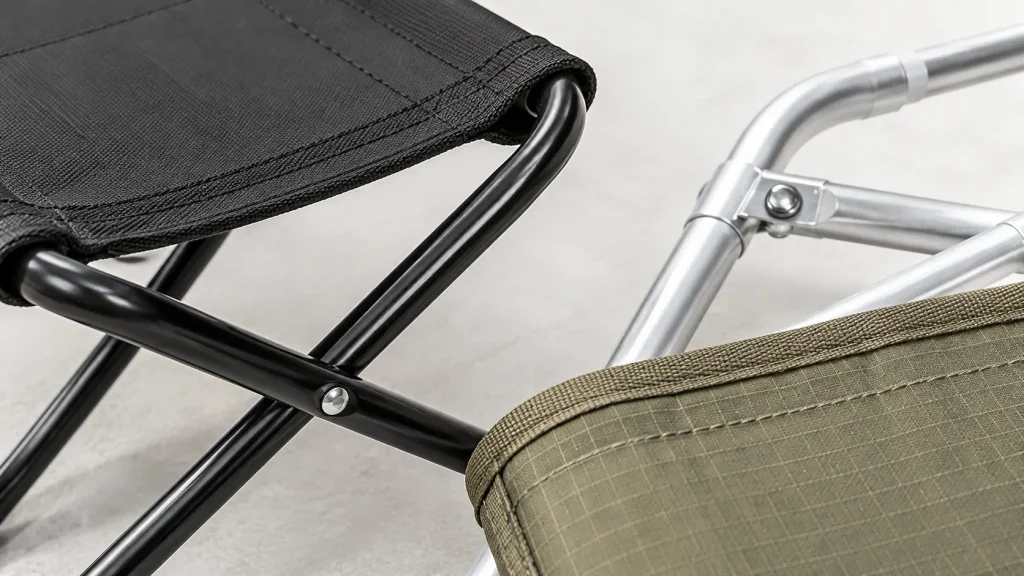
| Rivets and Folding Joints | Operate the stool repeatedly and check whether rivets, pivot points, and folding joints remain secure without binding, looseness, or deformation. |
| Fabric and Stitching | Confirm the fabric specification and inspect stitching, edge binding, and reinforcement at load-bearing areas. |
| Feet and Stability | Check whether the feet are secure, the frame sits evenly, and the stool remains stable during use. |
| Load Performance | Do not rely only on the supplier-stated load capacity; verify actual performance through appropriate testing. |
How to Choose a Camping Stool Manufacturer in China
When choosing a camping stool manufacturer, do not focus only on price or product images. It is more important to confirm the supplier’s production capability, quality control, product consistency, and experience with similar outdoor seating products. If you cannot visit the factory in person, ask the manufacturer to send videos of the production workshop. A structured outdoor products sourcing process should also verify the company entity, in-house and outsourced operations, inspection records, and whether the supplier accepts factory audits or production inspections. For broader due diligence, use this checklist for verifying camping furniture OEM/ODM manufacturers in China.
- Product Experience: Confirm whether the supplier has long-term experience producing camping stools or similar portable outdoor seating products.
- Key Production Capability: Confirm who handles tube processing, bending, welding, riveting, sewing, and final assembly, and whether the supplier can effectively control the quality of outsourced processes.
- Quality Control: Check whether the supplier has incoming material inspection, in-process checks, and final inspection procedures.
- Sample Consistency: Make sure the materials, structure, and specifications used in mass production match the approved sample.
- Testing Capability: Confirm whether the supplier can arrange load, stability, durability, or other required tests.
- Compliance Understanding: The supplier should understand the basic requirements of the target market, especially the differences between adult and children’s products.
What Can Be Customized on Camping Stools?
As with other private label outdoor products, camping stool customization can be divided into branding, specification changes, and structural modifications. Different levels of customization require different amounts of sampling, product development, and production confirmation.
- Branding: Logo, fabric color, frame color, carry bag, packaging, and hang tags.
- Specification Changes: Seat height, tube diameter, tube wall thickness, fabric specification, feet, product dimensions, and folded size.
- Structural Modifications: Frame structure, leg structure, hinge design, storage or cooler functions, reinforcement, and other changes to the folding structure.
Structural modifications are usually more complex than simple branding, so samples and product performance should be reconfirmed before mass production.
What Compliance Requirements Should Buyers Check?
Compliance requirements for camping stools depend on the target market and whether the product is intended for adults or children.
- United States: Children’s products, including folding stools designed primarily for children, generally have stricter safety, testing, certification, and labeling requirements than adult products.
- European Union: Buyers should check the GPSR, REACH restrictions, product traceability, and applicable outdoor furniture standards. CE marking should not be assumed.
- Other Markets: For the UK, Canada, and Australia, buyers should confirm local product safety and chemical requirements before placing an order.
- Children’s Products: Kids camping stools should not be treated the same as adult products. Buyers should separately confirm structural safety, pinch hazards, stability, material restrictions, labeling, and testing requirements.
What Should Buyers Consider for Packaging and Shipping?
The folded size of camping stools directly affects the number of units per carton, carton volume, and shipping costs, so buyers should not compare products based only on net weight.
- Folded Size: Confirm the folded length, width, and thickness.
- Units per Carton: Confirm the quantity per carton and the gross weight.
- Carton Size: Carton dimensions directly affect CBM and container loading efficiency.
- Packaging Method: Confirm carry bags, inner bags, retail boxes, and outer cartons based on wholesale, retail, or e-commerce requirements.
- Shipping Efficiency: For products of similar weight, a smaller folded volume may help reduce overall shipping costs.
Common Risks When Sourcing Camping Stools
Although camping stools have a relatively simple structure, problems can still occur during mass production with materials, components, and packaging. Buyers should pay particular attention to the following risks:
| Common Risk | What Buyers Should Check |
|---|---|
| Tube Specification Changes | Confirm that tube diameter and wall thickness in mass production match the approved specifications. |
| Fabric Downgrading | Lock in the fabric material, denier, weight, coating, and other agreed requirements. |
| Rivet and Joint Problems | Monitor riveting and joint assembly during mass production, as inconsistent rivet setting can create loose joints or restrict folding. |
| Sample and Mass Production Differences | Mass production should follow the approved sample and final specification sheet. |
| Outsourced Process Variation | Pay attention to batch consistency in outsourced processes such as powder coating and plastic injection. |
| Packaging Size Changes | Confirm the final carton dimensions to avoid unexpected changes in CBM, loading quantity, and shipping costs. |
What Factors Affect the Cost of Camping Stools?
The price of camping stools is influenced by materials, structure, specifications, customization, and order quantity. Even when two products look similar, their actual costs can differ significantly because of differences in tubing, fabrics, and structural requirements.
- Frame Material and Tube Specifications: The choice between steel and aluminum alloy, as well as tube diameter, wall thickness, and structural design, can affect both material cost and product weight.
- Fabric Specification: Different materials such as polyester, Oxford fabric, and ripstop fabric, along with denier, fabric weight, coating, and reinforcement, can affect the overall cost.
- Structural Complexity: Standard folding stools, tripod stools, ultralight models, storage stools, and cooler stools use different numbers of components and assembly methods, which can lead to different costs.
- Surface Treatment: Powder coating, painting, anodizing, and other finishes can affect appearance, corrosion resistance, and production cost.
- Customization Requirements: Simple customization such as logos, colors, and packaging usually has less impact, while changes to tubing, dimensions, or structure may require more sampling and development work.
- Order Quantity and Packaging: Order volume, units per carton, packaging method, and final carton size can affect both unit cost and overall shipping cost.
Conclusion
Camping stools may look simple, but buyers still need to pay close attention to product type, materials, tube specifications, folding structure, load performance, supplier capability, customization, compliance, packaging, and shipping.
When sourcing from China, the key is to define the product specifications clearly, choose the right supplier, approve the sample before mass production, and make sure the final products match the agreed requirements.
JingtuOutdoor is committed to helping overseas buyers find suitable camping stool suppliers in China and supporting sample coordination, production follow-up, and quality control.
Frequently Asked Questions
What is the typical MOQ for camping stools from China?
The MOQ depends on the stool design, materials, customization, and packaging requirements. Buyers should ask suppliers to quote based on the confirmed specifications and expected order quantity.
How can buyers verify the load capacity?
Do not rely only on the supplier-stated load capacity. Buyers should confirm the test method and verify the sample through appropriate load and stability testing.
Can camping stools be customized?
Yes. Common options include logos, colors, fabrics, frame finishes, carry bags, and packaging, while structural changes normally require additional sampling and testing.
How should buyers evaluate camping stool suppliers?
Buyers should check the supplier’s experience, production processes, quality-control records, and ability to keep mass production consistent with the approved sample. A factory audit can also be arranged when necessary.
What should buyers confirm before shipping?
Before shipment, confirm the quantity, workmanship, folding operation, load performance, labeling, packaging, and carton specifications against the approved sample and order requirements.