
Rocking Camping Chairs Wholesale from China
Source folding rocking camping chairs with custom fabrics, colors, frames, logos, and packaging for wholesale and private label projects.
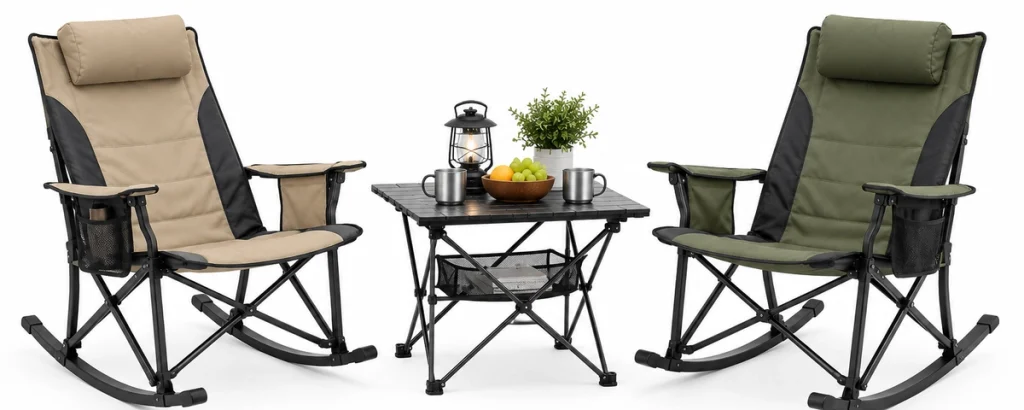
Rocking camping chairs are a specialized type of camping chair that combine portable outdoor seating with a rocking function. They belong to the wider camping furniture category and are part of the broader outdoor products range used for camping, leisure, patio, and event applications.
For B2B buyers, sourcing decisions go beyond appearance. Rocking mechanism, frame structure, stability, load capacity, folded size, fabric, customization, packaging, and target-market requirements can all affect product selection, cost, and bulk-order risk.
This guide covers the main rocking chair types, key specifications, frame materials, customization, compliance, quality inspection, and common sourcing risks to review before placing wholesale orders from China.
Rocking Camping Chair Types
For buyers sourcing rocking camping chairs wholesale from China, choosing the right chair type is the first step before comparing materials, specifications, customization, and supplier quotations. Rocking camping chairs come in different configurations for different comfort levels, use cases, and market positions. For B2B buyers, the main types include:
High-Back Rocking Camping Chairs
Designed for better back and head support, suitable for camping, patio, backyard, and leisure use.
Low-Profile Rocking Camping Chairs
Lower seating height and a more relaxed sitting position make them suitable for camping, beach, festivals, and casual outdoor use.
Padded and Oversized Rocking Chairs
Wider seats and thicker padding improve comfort, but usually increase product weight and packaging volume.
Reclining Rocking Camping Chairs
Adjustable backrests provide more seating positions but also add extra joints, locking points, and structural complexity.
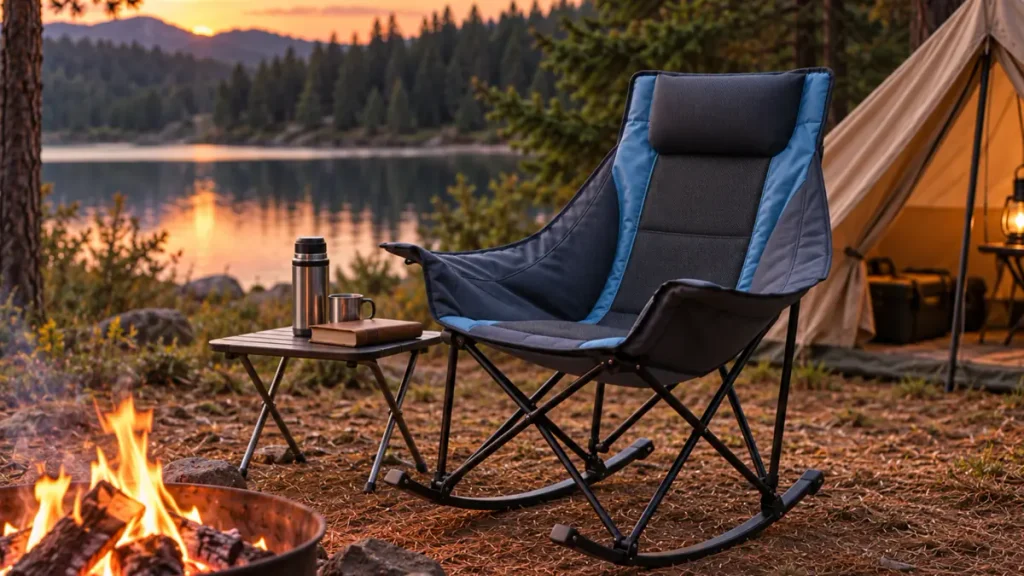
In addition to chair configuration, rocking camping chairs can also be classified by their rocking mechanism, including curved rocker rails, spring-assisted systems, suspended structures, and convertible designs. Different mechanisms can affect stability, durability, folded size, packaging, and inspection requirements.
Key Specifications to Confirm Before Quotation
Before comparing supplier quotations, buyers should make sure all suppliers are quoting against the same product specification. Differences in dimensions, materials, load rating, or folded size can lead to major differences in price, packaging, and product performance.
| Specification | What Buyers Should Confirm |
|---|---|
| Overall Dimensions | Confirm the chair’s overall width, depth, and height to match the intended market and use case. |
| Seat Height & Width | Check seat dimensions carefully, especially for low-profile, oversized, or high-back models. |
| Product Weight | Product weight affects portability, shipping cost, and market positioning. |
| Folded Size | Folded dimensions directly affect carton size, CBM, storage, and container loading. |
| Load Capacity | Load claims should be based on the final structure and verified through testing, not judged only by frame material. |
| Fabric Specification | Confirm fabric type, denier, mesh, padding, backing, and color requirements before sample approval. |
Other details should also be fixed before final quotation, including frame tube size and wall thickness, material and surface treatment, rocking mechanism, carry bag, individual packaging, master carton, and any customized retail packaging. A complete specification sheet helps buyers compare suppliers on the same basis and reduces the risk of accepting a lower quotation based on different materials or construction.
Frame Materials and Structure
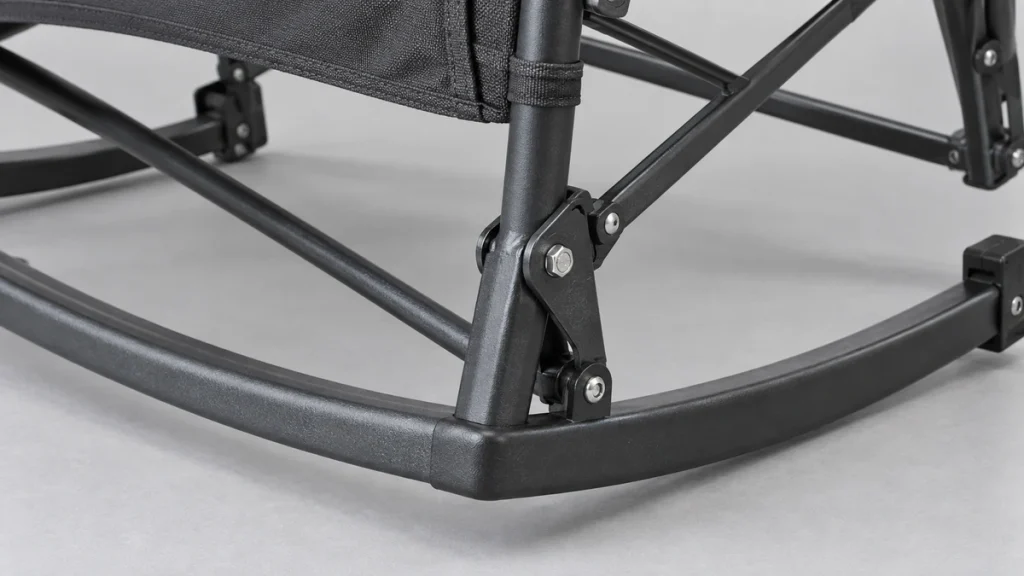
The frame affects the chair’s weight, strength, stability, and cost. Buyers should not look at the frame material alone, but also check how the chair is built and how the rocking parts are connected.
- Steel Frames: Common, strong, and usually more cost-effective, but often heavier.
- Aluminum Frames: Lighter and often used for higher-end products, but usually cost more.
- Tube Size: Thicker or larger tubes can change the chair’s strength, weight, and price.
- Moving Joints: Rocking chairs have more moving parts, so buyers should check whether the joints feel loose or uneven.
- Fasteners: Screws, bolts, and rivets should stay tight after repeated folding and rocking.
- Welding: Welds should look clean and consistent, and the frame should not be twisted or uneven.
- Surface Finish: Powder coating or other finishes help protect the frame for outdoor use.
Frame material alone does not decide how much weight a chair can hold. The final load capacity depends on the whole structure and should be confirmed through testing.
Customization Options for Wholesale Projects
Rocking camping chairs can be customized to match different brands, price levels, and target markets. Buyers should confirm customization requirements early because they can affect MOQ, sample time, cost, and lead time.
| Customization | What Buyers Can Adjust |
|---|---|
| Fabric and Color | Fabric type, mesh panels, padding level, and custom colors. |
| Logo and Branding | Logo placement on the chair, carry bag, or packaging. |
| Padding and Mesh | Headrests, extra padding, and mesh areas for comfort and ventilation. |
| Frame Finish | Frame color and surface finish to match the product design. |
| Carry Bag | Bag color, fabric, size, and logo placement. |
| Retail Packaging | Cartons, labels, inserts, and packaging for wholesale, e-commerce, or private label projects. |
Customization should be confirmed before the final quotation so suppliers can calculate the correct MOQ, sample requirements, cost, and lead time.
Common Sourcing Risks
In sourcing, many problems start with small communication or specification errors rather than major technical issues. A wrong number, unclear requirement, or missed detail in materials, dimensions, logos, or packaging can become a bigger problem once production begins.
From my sourcing experience, another common mistake is comparing prices before the product details are fully aligned. Two suppliers may appear to quote the same chair, but the actual materials, frame, fabric, accessories, or packaging can be different.
- Unclear Specifications and Communication: Small errors in dimensions, materials, colors, accessories, or packaging can lead to differences in the final product.
- Comparing Prices Too Early: A lower quotation does not always mean the same product, so specifications should be aligned first.
- Sample and Production Differences: Bulk production should follow the approved sample, especially for the frame, fabric, rocking structure, logo, and packaging.
- Unverified Load Claims: Do not rely only on the supplier’s stated load capacity; the final product should be checked and tested according to project requirements.
- Changes Without Buyer Approval: Any change in materials, structure, or packaging during production should be confirmed with the buyer first.
Careful specification checking and clear confirmation before production can prevent many sourcing problems later.
Compliance and Testing Considerations
Compliance requirements can vary by market, product design, and whether the chair is intended for adults or children. From my sourcing experience, one common mistake is assuming that a supplier’s existing test report automatically applies to a new order. If the frame structure, material, rocking mechanism, or product size changes, the previous report may no longer fully represent the final product.
- European Union: Adult products may need to consider GPSR requirements and relevant outdoor seating standards such as EN 581.
- United States: Adult and children’s chairs should be considered separately, as children’s folding seating may involve different safety requirements.
- Canada and Australia: Applicable consumer product safety requirements should be confirmed according to the target market and final product design.
In actual sourcing work, it is safer to confirm the target market and testing requirements before mass production, and then make sure the final approved sample matches the product that will be tested and produced.
Quality Inspection Before Shipment
Pre-shipment inspection should confirm that mass production matches the approved sample and specification before the goods are released. For rocking camping chairs, buyers should focus on the parts that directly affect function, appearance, and packaging. If you cannot inspect the goods in person, you can appoint a third-party inspection company or a sourcing agent to carry out the inspection on your behalf.
- Frame Alignment: Check that the chair sits evenly and the frame is not twisted or uneven.
- Rocking Function: Make sure the rocking motion is smooth and consistent without abnormal resistance or noise.
- Loose Parts: Check bolts, rivets, joints, and other moving parts for looseness.
- Fabric and Stitching: Look for fabric damage, uneven stitching, loose threads, or poor tension.
- Logo and Color: Confirm that logo position, print quality, and product colors match the approved sample.
- Accessories: Check carry bags, cups holders, headrests, or other included parts.
- Packaging: Confirm carton condition, carton marks, labels, quantity, and packing method.
The main purpose of inspection is to make sure the bulk order is consistent with the approved sample before shipment.
Conclusion
Sourcing rocking camping chairs from China involves more than comparing price and appearance. Buyers should first confirm the chair type, key specifications, frame structure, customization requirements, target-market compliance, and inspection points before moving into bulk production.
JingtuOutdoor’s sourcing services can support overseas buyers with supplier coordination, sample follow-up, customization, quality inspection, and project coordination. Keeping specifications, approved samples, testing requirements, and production details aligned from the beginning can help reduce sourcing risk and make supplier comparisons more reliable.
FAQ
What is the typical MOQ for rocking camping chairs?
MOQ varies by supplier, chair design, fabric, color, logo, and packaging requirements. Standard models usually have more flexible MOQs than fully customized projects.
Can I order a sample before bulk production?
Yes. Buyers can usually request a stock sample, modified sample, or custom sample depending on the project. The final approved sample should be used as the reference for mass production.
How long does production usually take?
Lead time depends on the product design, customization level, material availability, and order quantity. Custom projects usually take longer than standard models.
Can rocking camping chairs be customized with my logo and colors?
Yes. Common options include custom fabric colors, logo printing, embroidery, carry bags, frame finishes, and packaging.
How should load capacity be confirmed?
Load capacity should not be judged only by the frame material. It should be confirmed based on the final chair structure and appropriate testing.
Are children’s rocking camping chairs different from adult models?
Yes. Children’s folding or rocking chairs may involve different safety and testing requirements, so they should be treated separately from adult products.
What should I check before shipment?
The main points include the frame, rocking function, loose parts, fabric and stitching, logo, accessories, quantity, and packaging. If you cannot inspect the goods yourself, you can appoint a third-party inspection company or sourcing agent.