
Camping Chair Frame Material Selection
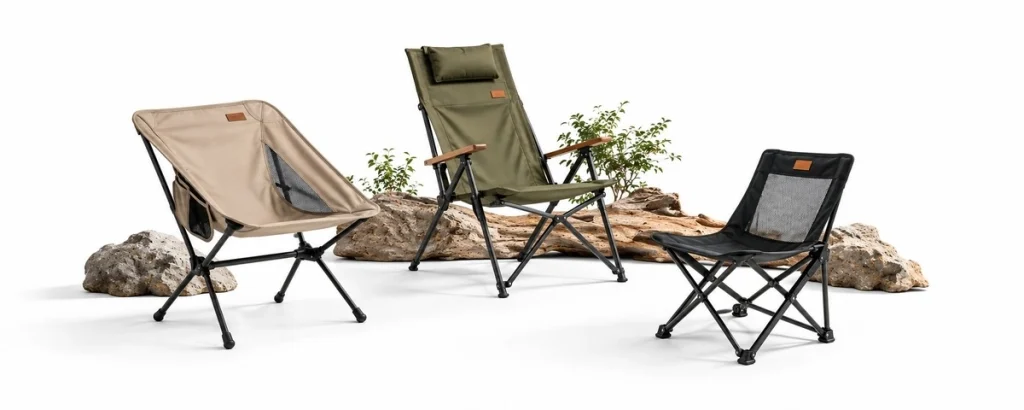
For overseas buyers of outdoor products, camping chair frame material is one of the key considerations when selecting camping products. Steel and aluminum are both common options, but the better choice depends on the chair’s target weight, load requirement, price positioning, and market positioning.
When selecting a frame material, buyers should consider the chair’s target weight, load requirements, durability, and other overall frame performance requirements to ensure the product fits its intended price positioning and use scenario. Even when the same material is used, differences in tube diameter, wall thickness, and structural design can result in significantly different performance.
This guide compares steel and aluminum camping chair frames from a B2B buyer’s perspective and explains the key material, structural, and manufacturing factors that affect frame performance, helping buyers make better decisions before sample approval and mass production.
- Start with the Product Positioning, Not the Material
- Steel vs Aluminum: Which Frame Material Fits the Product?
- What Actually Determines Frame Strength and Load Capacity?
- How Chair Structure Changes the Frame Requirement
- What Other Factors Affect Camping Chair Frame Performance?
- How Material Choice Affects Cost, MOQ, and Manufacturing
- How Tube Specifications Affect the Buying Decision
- Conclusion
- FAQs
Start with the Product Positioning, Not the Material
Before choosing between steel and aluminum, buyers should first define the type of camping chair they want to develop. The right camping chair frame material and frame solution depend on the product’s target weight, load requirement, price range, and market positioning.
For example, a lightweight portable chair may place more emphasis on low frame weight and compact construction, while a heavy-duty folding chair may prioritize structural stability and durability.
These different product requirements will directly influence the choice of camping chair frame material, tube specifications, and the overall frame design.
Steel vs Aluminum: Which Frame Material Fits the Product?
Steel and aluminum are two of the most common camping chair frame materials, and their differences in weight, strength, cost, and corrosion resistance make each better suited to different product positioning and usage scenarios.
Steel Frames
Steel frames are commonly used for standard folding chairs, heavy-duty chairs, and event seating. Buyers of these products often place more emphasis on cost control, structural stability, and durability. If product weight is not a major priority, steel is usually a practical choice.
Typical use scenarios include:
- Car camping
- Family camping
- Events and festivals
- Heavy-duty camping chairs
- Cost-sensitive retail products
Aluminum Frames
Aluminum frames are better suited to products that emphasize lightweight construction, portability, corrosion resistance, and a more premium market position. Aluminum can help reduce the overall chair weight, but the final lightweight performance still depends on tube specifications, wall thickness, and the overall frame design.
Typical use scenarios include:
- Backpacking
- Hiking
- Cycling and motorcycle camping
- Beach and coastal environments
- Lightweight premium camping chairs
The final choice should still be based on the product’s target weight, load requirement, price positioning, and market positioning rather than simply choosing between steel and aluminum. Buyers should also consider tube specifications, frame structure, surface treatment, manufacturing process, and the final cost of the finished chair.
What Actually Determines Frame Strength and Load Capacity?
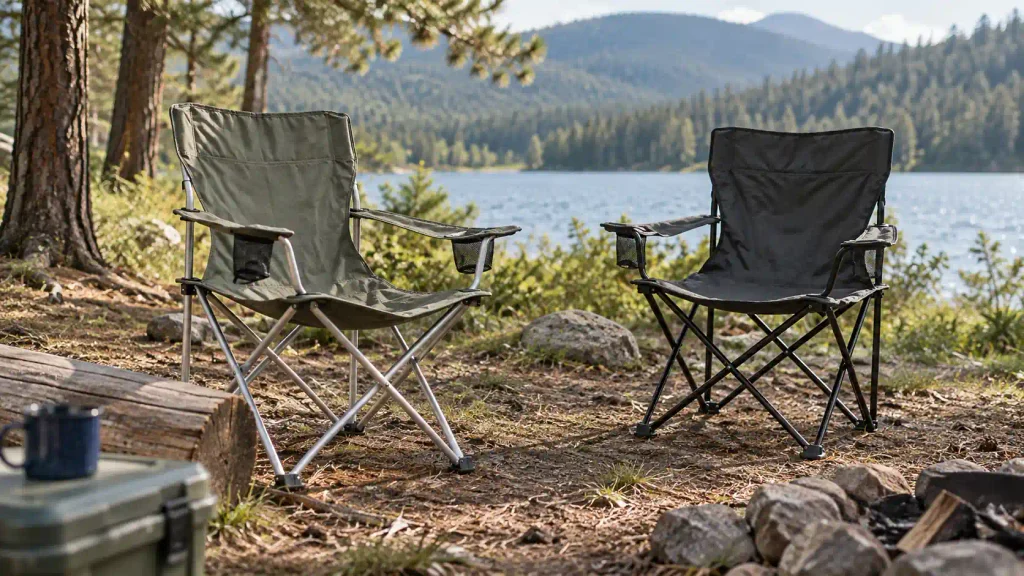
Frame strength and load capacity depend on more than the choice between steel and aluminum. Several structural factors work together to determine the final performance of a camping chair frame.
- Tube diameter: A larger tube diameter can improve frame stiffness and help the structure resist bending.
- Wall thickness: Thicker tube walls can increase strength, but they also add weight and material cost.
- Frame structure: The overall frame geometry and support layout affect how the load is distributed across the chair.
- Joints and connections: Rivets, welding points, folding joints, and cross-bracing can become critical stress areas during repeated use.
For B2B buyers, this means that material name alone is not enough. Frame specifications and structural design should be reviewed together, and the final load capacity should be confirmed through sample testing and quality inspection.
How Chair Structure Changes the Frame Requirement
Different camping chair structures place different demands on the frame. The same camping chair frame material may perform differently depending on the chair type, frame geometry, and load path.
- Quad folding chairs: These use multiple crossing frame members and pivot points, so joint strength and overall frame stability are especially important.
- Director chairs: These usually use a more rigid frame layout, which places greater importance on side-frame strength, hinge points, and connection quality.
- Compact pole-frame chairs: These prioritize low weight and portability, so the frame needs to remain lightweight while providing sufficient stiffness and support.
- High-back chairs: The taller backrest can increase leverage on the frame, placing more stress on the rear supports and connection points.
For B2B buyers, frame material should always be evaluated together with the chair structure. A frame solution that works well for one chair type may not be suitable for another.
What Other Factors Affect Camping Chair Frame Performance?
Besides material and structure, several other factors can also affect the final performance of a camping chair frame. For B2B buyers, long-term durability and product reliability depend not only on whether the frame is made of steel or aluminum, but also on how the frame is finished, manufactured, used, and tested.
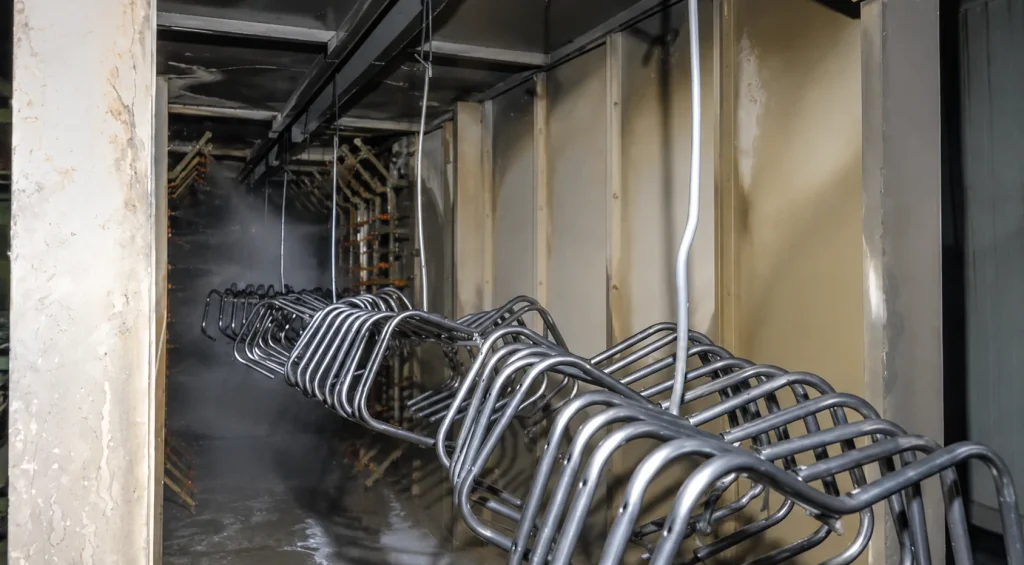
- Surface Treatment: Powder coating, anodizing, and other finishes can affect corrosion resistance, appearance, and long-term durability. For outdoor products, surface treatment is not only a cosmetic issue but also part of frame protection.
- Usage Environment: Camping chairs used in humid, coastal, or salt-exposure environments usually need a higher level of corrosion protection than products intended for normal inland use.
- Manufacturing Quality: Welding quality, riveting accuracy, tube forming, and assembly consistency can all affect frame strength and durability. Even with the same camping chair frame material, differences in manufacturing quality can lead to different performance.
- Safety and Testing Requirements: Frame selection should also consider the safety and structural testing requirements of the target market. For example, outdoor seating standards such as EN 581 evaluate strength, stability, and overall structural safety, while children’s folding chairs may also have specific requirements for locking mechanisms, pinch points, and load testing.
For B2B buyers, frame performance should be evaluated as a complete system. Material, structure, surface treatment, manufacturing quality, usage environment, and testing requirements all need to be considered together.
How Material Choice Affects Cost, MOQ, and Manufacturing
Material selection affects more than the price of steel or aluminum. It can also influence processing cost, tooling requirements, minimum order quantity, and production lead time.
| Factor | How Material Choice Can Affect It |
|---|---|
| Total Product Cost | Material grade, tube size, wall thickness, forming, welding, surface treatment, and assembly can all affect the final cost of the finished chair. |
| MOQ & Tooling | Non-standard tube sizes, custom profiles, special wall thicknesses, or custom finishes may require additional tooling or higher minimum order quantities. |
| Processing Requirements | Steel and aluminum may require different forming, welding, finishing, and production processes, which can affect factory capability and overall manufacturing complexity. |
| Production Lead Time | Material availability, custom tube production, surface treatment, and factory scheduling can all affect delivery time. |
If non-standard or custom tubing is used, buyers should pay close attention to its impact on production lead time, as additional material sourcing, custom processing, or tooling preparation may extend the overall schedule.
How Tube Specifications Affect the Buying Decision
- Weight: Tube diameter and wall thickness directly affect the final chair weight.
- Strength: Even with the same frame material, different tube sizes and wall thicknesses can result in very different structural performance.
- Cost: Non-standard tube sizes, special wall thicknesses, or custom profiles may increase material and processing costs.
For buyers, tube specifications matter because they affect the balance between weight, strength, and cost.
Conclusion
There is no single best camping chair frame material for every product. The right choice depends on the chair’s target weight, load requirement, price positioning, and market positioning.
Steel is often a practical option for conventional and cost-sensitive products, while aluminum is more suitable when lightweight construction and portability are higher priorities.
Material alone does not determine the final frame performance. Tube specifications, frame structure, surface treatment, and manufacturing quality should also be considered together when evaluating a frame solution.
JingtuOutdoor supports overseas buyers with camping chair sourcing, supplier coordination, and product development in China. If you are developing a new camping chair and need help evaluating frame options or coordinating with suppliers, feel free to contact us.
FAQs
Is steel or aluminum better for a camping chair frame?
Neither is always better. Steel is often suitable for cost-sensitive and conventional products, while aluminum is more attractive for lightweight and portable designs.
Does aluminum always make a camping chair lighter?
Not necessarily. Final chair weight also depends on tube diameter, wall thickness, frame geometry, joints, and other components.
Does a thicker tube always mean higher load capacity?
No. Tube thickness is only one factor. Material, tube diameter, frame structure, joints, welding, and overall load distribution also affect frame strength.
What should buyers confirm when comparing camping chair frames?
Buyers should compare the material, tube specifications, frame structure, surface treatment, finished weight, load requirement, and total product cost.
Can custom frame specifications affect MOQ or lead time?
Yes. Non-standard tubing, custom profiles, special wall thicknesses, or special finishes may require additional sourcing, tooling, or processing, which can affect MOQ and production lead time.