
Camping Chair Development: From Concept to Mass Production
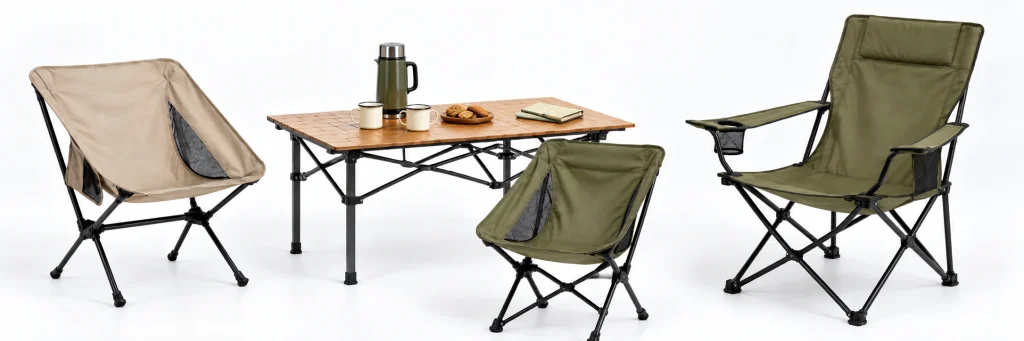
Camping chairs may appear simple in structure, but turning a product idea into stable mass production usually involves multiple stages, including structural design, material selection, prototyping, testing, and cost control. For buyers, every decision made during the product development process is critical.
China has become one of the world’s major manufacturing bases for camping chairs and outdoor furniture, supporting everything from modifications to existing platforms and ODM development to completely new structural designs and customized production. Its mature supply chain covers metal tubing, fabrics, plastic components, hardware, surface finishing, sewing, assembly, and packaging, providing a strong manufacturing foundation for products with different structures, functions, and market positions.
This guide explains the camping chair product development process from product concept to mass production, covering product requirements, structural and material design, prototyping, testing, pilot production, mass-production preparation, and quality control. It is designed to help B2B buyers manage new camping chair development projects in a more systematic way.
- Start With a Clear Product Brief
- Choose the Right Development Route
- Design the Chair Structure
- Select the Right Materials
- Build and Review the First Prototype
- Test, Validate, and Approve the Final Sample
- Prepare for Mass Production and Run a Pilot Production
- Confirm Payment Terms Before Production
- Start Mass Production and Quality Control
- Manage Common Development Risks
- Summary
- Frequently Asked Questions
Start With a Clear Product Brief
A successful camping chair development project should begin with a clear product brief. Buyers should first define who the product is for, where it will be used, which market it will be sold in, and how it should be positioned before moving into structure, materials, sampling, and testing.
Target User and Use Scenario
Define whether the chair is intended for adults or children and whether it will mainly be used for backpacking, car camping, RV travel, beach use, festivals, or commercial outdoor settings. Different use scenarios can lead to very different requirements for size, weight, comfort, and portability.
Product Size and Performance Targets
Set the basic targets for overall size, seat height, folded size, product weight, portability, comfort, and intended use conditions. These decisions will influence later choices in frame design, fabric, and accessories.
Commercial and Packaging Requirements
Buyers should also define the target market position, branding requirements, carry bag, cup holder, side pockets, retail or bulk packaging, and shipping considerations.
At this stage, the goal is to make the product direction clear before detailed engineering and sampling begin.
Choose the Right Development Route
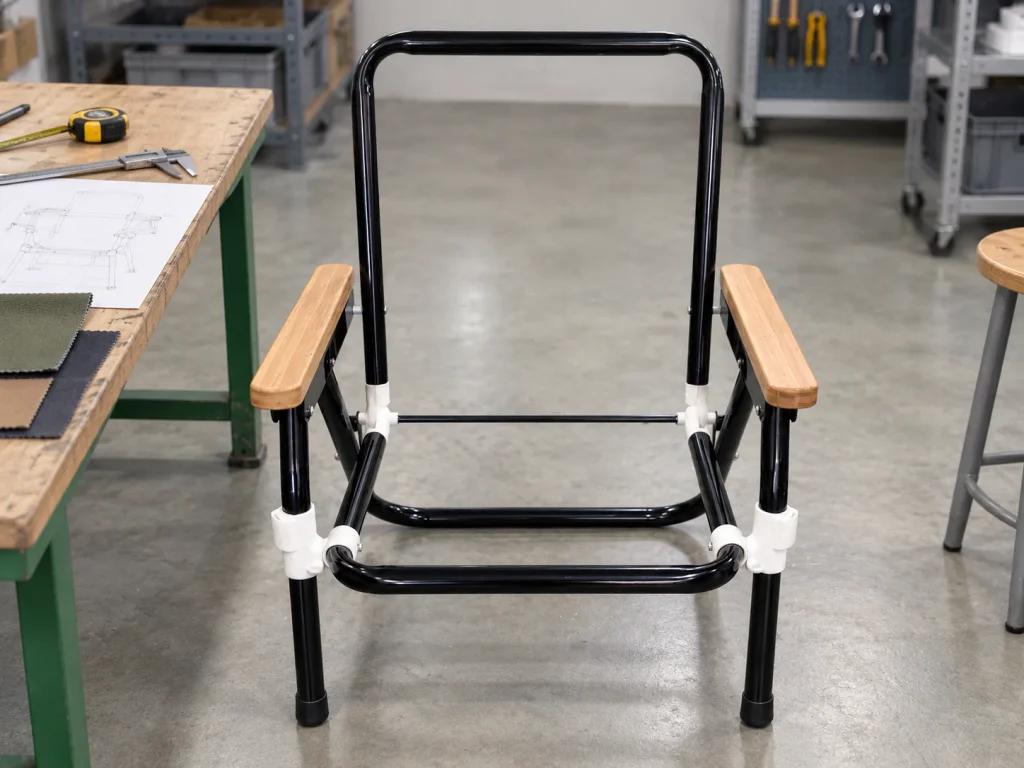
Once the product direction is clear, the next step is to choose the right development route. Different projects may require different levels of customization depending on product differentiation, budget, and development complexity.
Common development routes include:
- Modify an existing product platform
- Adjust dimensions, fabrics, accessories, or selected functions
- Develop new structures, connectors, or folding mechanisms
- Design a completely new camping chair from the ground up
If the project only involves changes to color, logo, packaging, or simple accessories, it is usually closer to customization or private label. Changes to the structure, function, or key components require a more complete product development process.
Design the Chair Structure
During the camping chair design stage, the buyer should work with the supplier to define the chair’s core structure. This stage affects not only appearance, but also folding function, stability, safety, durability, and consistency in mass production.
Key structural considerations include:
- Frame Structure and Load Path
Confirm how the chair carries and transfers loads through the seat, backrest, and legs. Different structural layouts can affect stability, weight, and overall durability. - Folding and Locking Mechanisms
Review whether folding, unfolding, and locking work smoothly, and whether there is any risk of unexpected collapse, looseness, or unstable operation. For folding chairs, this is also an important part of later safety validation. - Rivets, Bolts, and Connectors
Connection methods can affect structural strength and long-term performance. Buyers should review key joint locations, plastic connectors, and hardware, while also considering consistency in bulk production. - Stability, Pinch Points, and Shear Risks
The structure should be reviewed early for obvious tipping risks, pinch points, shear points, exposed sharp edges, or open tube ends, so these issues are not discovered only during testing or mass production.
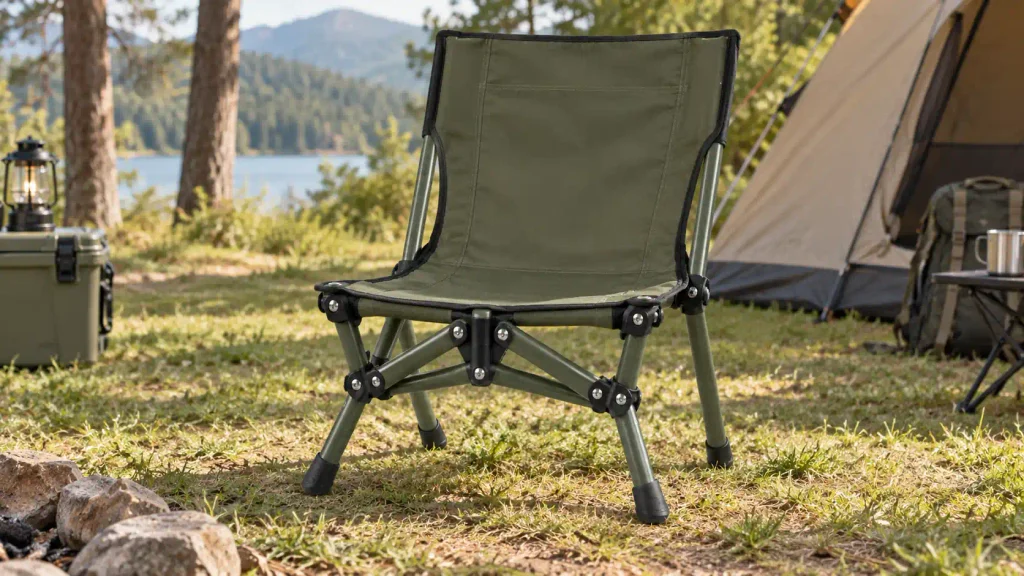
At this stage, buyers should not rely on so-called “standard” tube diameters or wall thicknesses. These parameters should be determined based on the specific structure, materials, target weight, use scenario, and testing requirements rather than treated as universal specifications for all camping chairs.
Select the Right Materials
Material selection affects the chair’s weight, durability, corrosion resistance, appearance, and manufacturing cost. The final choice should match the product’s target use, price position, and structural requirements.
Key material considerations include:
- Steel or aluminum camping chair frame
- Fabric type and construction
- Plastic components and hardware
- Powder coating, anodizing, or other surface finishes
Materials should be selected based on measurable performance requirements rather than simple assumptions such as “aluminum is always better” or “higher-denier fabric is always stronger.”
Build and Review the First Prototype
Once the structure and materials are confirmed, the next step is to build the first camping chair prototype. The main goal at this stage is to verify whether the design works as expected and identify problems before moving into production preparation.
Key checks include:
- Overall dimensions and folded size
- Folding, locking, and basic stability
- Fabric fit, tension, and sewing quality
- Frame joints, connectors, and surface finish
- Accessories and functional details
The first prototype is mainly used to identify design and manufacturing issues. It should not be treated as the final production standard until further review, testing, and approval are completed.
Test, Validate, and Approve the Final Sample
After the first prototype has been reviewed, the product should go through further testing and validation to confirm that it performs as intended and to identify major safety, performance, and manufacturing risks before production preparation begins. At this stage, buyers should agree with the factory on an inspection checklist, key inspection items, and acceptance criteria, then continue checking these points during sample revisions, pilot production, and mass production.
Key checks and validation points include:
- Stability, Strength, and Durability
Confirm that the chair remains stable under its intended use conditions and meets the required structural performance for the project. - Folding, Locking, and Pinch/Shear Risks
Check whether the folding and locking mechanisms operate smoothly and reliably, and identify any risk of unexpected collapse, pinch points, or shear hazards. - Final Dimensions, Weight, and Overall Structure
Verify that the key dimensions, folded size, product weight, and overall structure match the approved requirements. - Fabric, Sewing, Tension, and Workmanship
Check fabric fit, tension, stitching, reinforcement areas, and overall workmanship for consistency and obvious defects. - Frame Joints, Hardware, and Surface Finish
Confirm that rivets, bolts, connectors, welds, and surface finishes are secure and free from obvious looseness or finish defects. - Accessories, Functions, and Branding Details
Verify that cup holders, side pockets, carry bags, logos, and other functional accessories are complete and match the approved version. - Packaging, Labeling, and Target-Market Requirements
Check packaging fit, labels, barcodes, warning information, and other requirements related to the target market. - Approved Materials and Components
Confirm that the main materials, hardware, and components used in the final sample match those planned for mass production and are not substituted without approval.
Routine factory checks can help identify obvious issues, but they should not replace standardized safety or compliance testing when formal verification is required. For example, adult outdoor seating sold in Europe may be evaluated against EN 581-2, while children’s folding chairs sold in the United States are subject to CPSC requirements. Once the final sample is approved, it can serve as a visual and functional reference for production, but it should still be used together with the BOM, drawings, specifications, testing requirements, and agreed quality standards.
Prepare for Mass Production and Run a Pilot Production
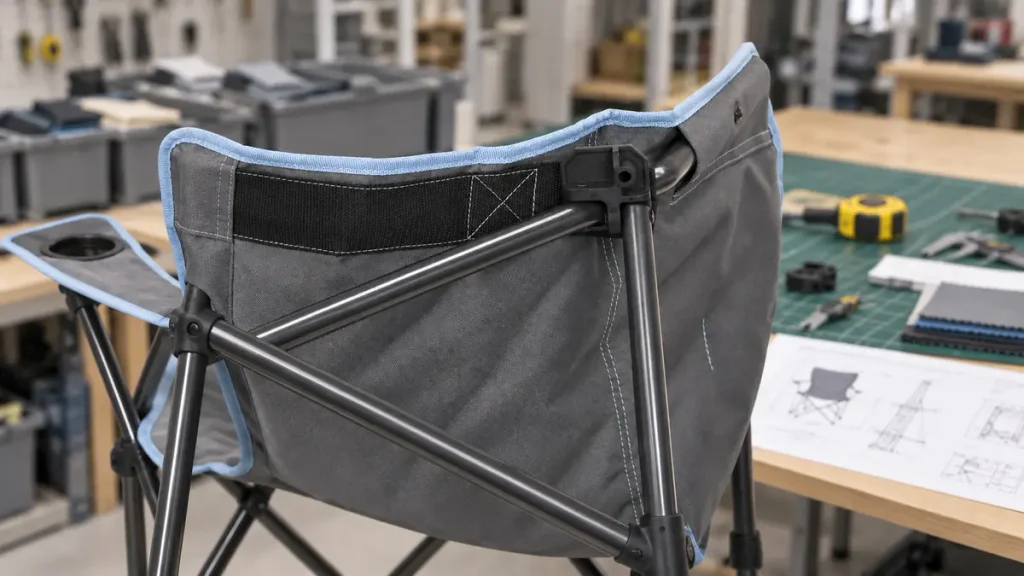
Before full mass production begins, the approved design should first be prepared for production and then verified under actual production conditions through a pilot run.
| Stage | Key Items to Confirm |
|---|---|
| Mass Production Preparation | Final BOM, approved drawings and specifications, confirmed materials and components, work instructions, tooling, jigs and fixtures, QC checkpoints, packaging specifications, and change-control requirements |
| Pilot Production | Material and component availability, tooling and fixture performance, assembly sequence, dimensional consistency, folding and locking function, common production defects, QC checkpoints, and packaging fit |
The approved sample should be linked to the BOM, drawings, specifications, testing requirements, and quality standards. Any later change to materials, components, structure, or process should be reviewed before it is introduced into production.
Pilot production is an important step in the camping chair manufacturing process, helping buyers verify assembly consistency, tooling performance, production defects, QC checkpoints, and packaging fit before full-scale production.
Confirm Payment Terms Before Production
Camping chair product development may involve sample fees, tooling or mold costs, testing expenses, and mass-production payments. Buyers should confirm the relevant costs and payment terms before moving into each stage of the project.
Key points to confirm include:
- Sample and development fees
- Tooling or mold costs, if required
- Testing costs
- Pilot production costs
- Deposit and balance terms for mass production
Payment terms should be linked to clear project stages so that both sides understand what has been completed and approved before the next payment is made.
Start Mass Production and Quality Control
Once the pilot run is completed and major issues are resolved, the project can move into mass production. The focus now shifts from product development to maintaining consistency throughout the production process.
Key quality control activities include:
- Incoming material inspection
- In-process inspection
- Dimensional checks
- Folding and locking checks
- Workmanship inspection
- Approved sample comparison
- Final random inspection
- Corrective action before shipment
The approved sample, BOM, drawings, specifications, and QC requirements should remain the reference throughout production. Any material, component, or process change should be controlled to avoid unexpected differences between the approved sample and bulk production.
Manage Common Development Risks
| Risk | What Buyers Should Control |
|---|---|
| Bulk production differs from the approved sample | Compare production against the approved sample, BOM, and specifications |
| Loose joints, riveting, or welding variation | Strengthen in-process checks and fixture control |
| Fabric tension or stitching inconsistency | Compare sewing and fabric quality against approved requirements |
| Stability, folding, or locking problems | Verify function and basic stability during production |
| Unapproved material or component changes | Require approval before any BOM or material substitution |
Other common risks include surface finish defects, packaging damage, incorrect packing, and late design changes, which should be controlled through clear specifications and change management.
Summary
Successful camping chair development depends on clear requirements, approved samples, and consistent quality standards from prototype to mass production.
JingtuOutdoor helps B2B buyers coordinate suppliers, samples, testing, pilot production, and quality control in China.
If you are developing a new camping chair or modifying an existing design, contact us with your requirements and reference images.
Frequently Asked Questions
How long does camping chair product development take?
There is no fixed timeline. It depends on the design complexity, number of prototype rounds, tooling requirements, testing, and production preparation.
What is the difference between private label and product development?
Private label usually focuses on branding, colors, packaging, or minor product changes. Product development may involve new structures, materials, functions, components, and engineering validation.
Does an approved sample guarantee mass production quality?
No. An approved sample is an important reference, but stable mass production also depends on controlled BOM, drawings, specifications, processes, and quality checks.
Should camping chairs be tested before mass production?
Yes. The required testing depends on the target market, product design, and intended user. Routine factory checks should not replace standardized testing when formal safety or compliance verification is required.
What should be confirmed before mass production starts?
The buyer should confirm the approved sample, BOM, drawings, specifications, testing requirements, packaging, QC checkpoints, and change-control requirements.